1
Solar system and supply audit
We review your existing inverter, export meter, generation data and incomer capacity to confirm the optimal CT position and charger hardware for your specific array and vehicle.
If you have solar panels, or are planning them, and want your EV to charge from that generation rather than compete with it, this is the relevant page; the next step is a survey to confirm which charger and monitoring setup suits your system. A standard EV charger draws from the grid regardless of what your solar panels are generating. A solar-compatible charger does something more useful: it monitors the live balance between your solar generation and your household consumption, and adjusts the charging current to absorb surplus generation that would otherwise be exported. The result is that your vehicle charges from solar power when it is available, and from the grid - ideally at an off-peak tariff - when it is not. We install and commission solar-compatible EV chargers including the myenergi Zappi and SolarEdge EV charger, with CT monitoring, smart scheduling and off-peak tariff integration. The proportion of charging covered by solar depends on your array size, household consumption, vehicle usage pattern and the hours the car is parked at home - we discuss realistic expectations at survey stage. See also our solar systems and EV charging hub.

Solar-compatible EV charging requires correct CT clamp placement, generation meter integration and multi-mode configuration - not just a standard charger installation. We have specific experience commissioning Zappi and SolarEdge EV hardware across different inverter platforms, and we confirm the integration approach for your specific system at survey stage.
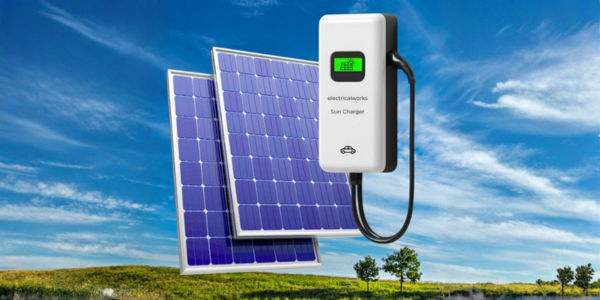
Connecting a solar charger to your generation meter typically requires a monitoring link from the incomer to the charger. Where running a data cable through finished surfaces would be disruptive, we can deploy wireless CT solutions that transmit consumption data without additional cabling through the building fabric.

We configure installations to prioritise solar generation when available, and fall back to off-peak grid tariff charging overnight when generation is insufficient. The achievable savings depend on your specific tariff, solar output, vehicle usage and electrical setup - we set realistic expectations at survey stage and advise on how to get the most from the system year-round.





We review your existing inverter, export meter, generation data and incomer capacity to confirm the optimal CT position and charger hardware for your specific array and vehicle.
CT clamp sited at the incomer, generation meter communication protocol confirmed, and charger hardware specified to match your inverter's export data capability.
Charger installed with concealed or wireless CT connection, then fully commissioned in Eco, Eco+ and Fast modes under live solar generation before sign-off.
BS 7671 test schedule completed, Octopus Intelligent off-peak fallback configured, and DNO notification submitted by our team where required.
The value of solar diversion lies in the difference between what your panels generate and what you would otherwise pay to charge from the grid - but how much is captured depends on the overlap between solar generation and the hours your car is parked and plugged in.
A CT clamp at the main incomer measures instantaneous net power flow every second. When generation exceeds all household loads combined, the surplus that would otherwise travel to the grid is detected by the charger firmware, which ramps its current draw from the minimum 6A threshold upward to absorb it - maximising the proportion of solar captured in the vehicle. On sunny days with good generation and a parked vehicle, a meaningful portion of the day's charge can come from solar rather than the grid. EV charging performance and savings depend on the charger, vehicle, tariff, usage profile, solar generation and electrical infrastructure - we assess these factors before specifying equipment.


A solar-diversion charger is not a binary on/off device. It offers a hierarchy of intelligent modes that give the homeowner complete control over the trade-off between green credentials and charging speed.
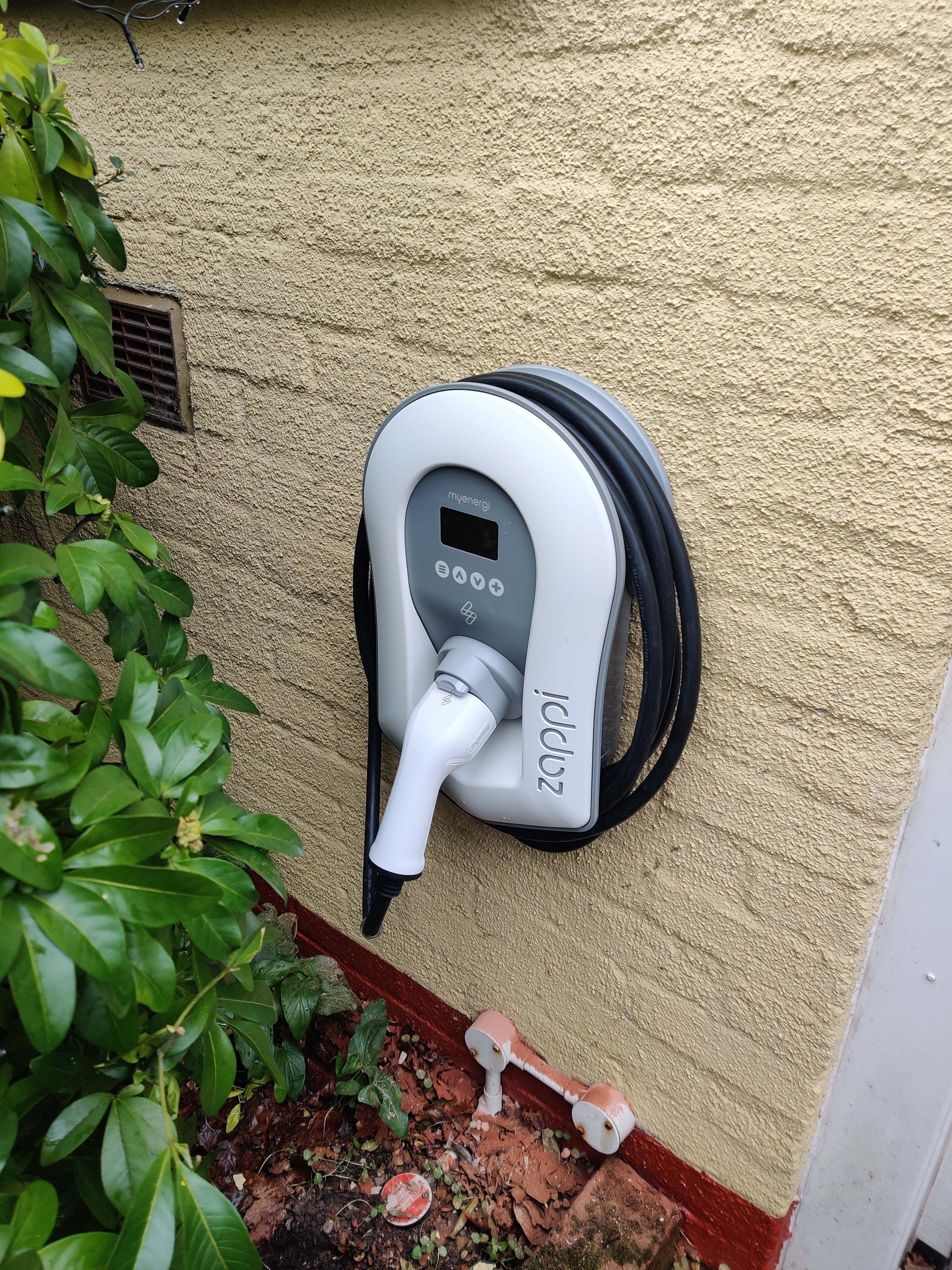
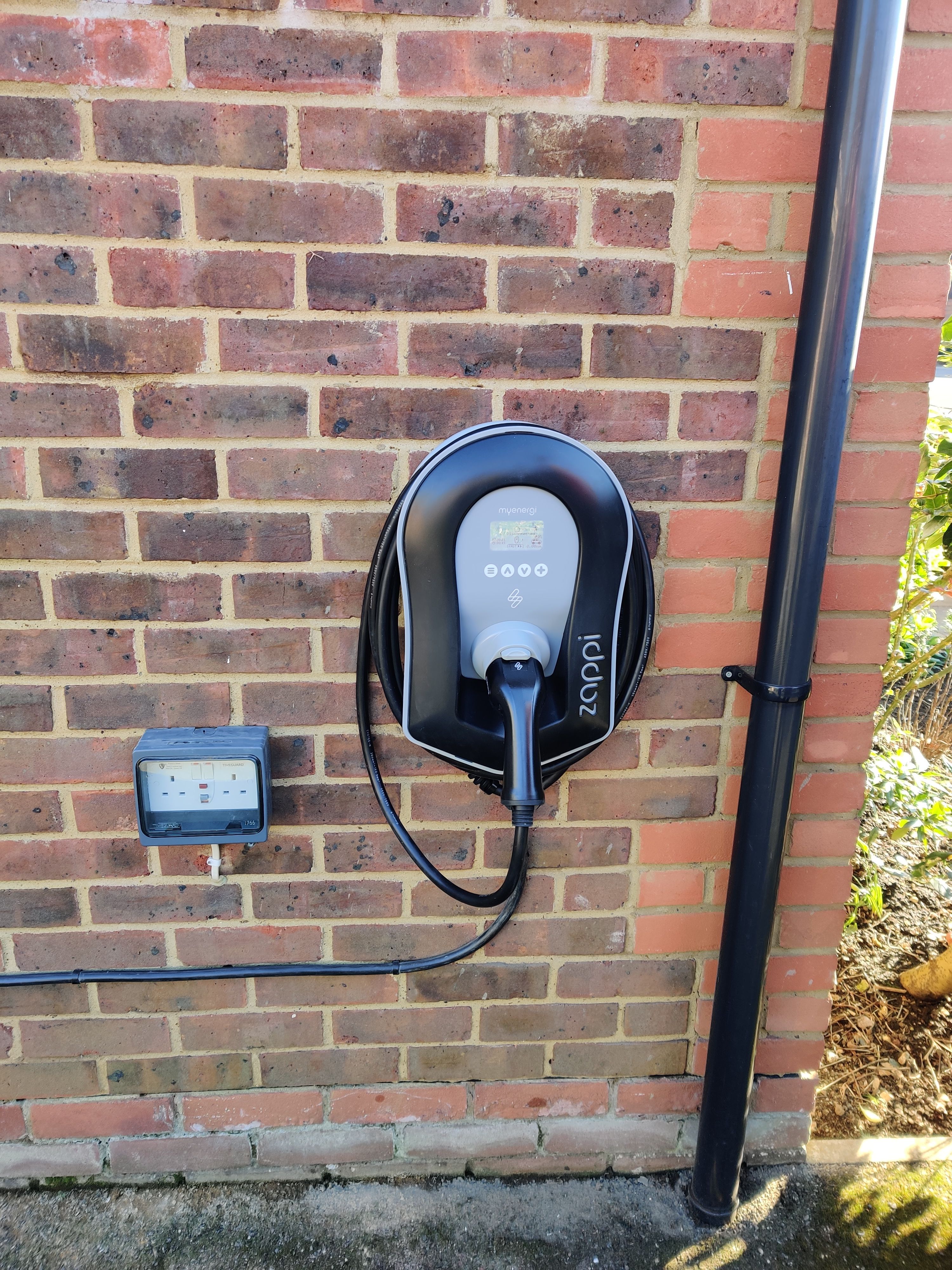
The Zappi's three charging modes span the full spectrum from pure solar to pure grid. In 100% Green (Eco+) mode, the charger draws only from confirmed surplus solar generation - it will not take a single watt from the grid, even if that means charging slowly on a partly cloudy afternoon. In Eco mode, the charger blends solar surplus with a minimum grid top-up to maintain a continuous charge session. In Fast mode, the charger draws at full 7kW from the grid when time is critical. All three modes are accessible from the myenergi app and can be scheduled automatically by time of day, generation forecast, or departure time.
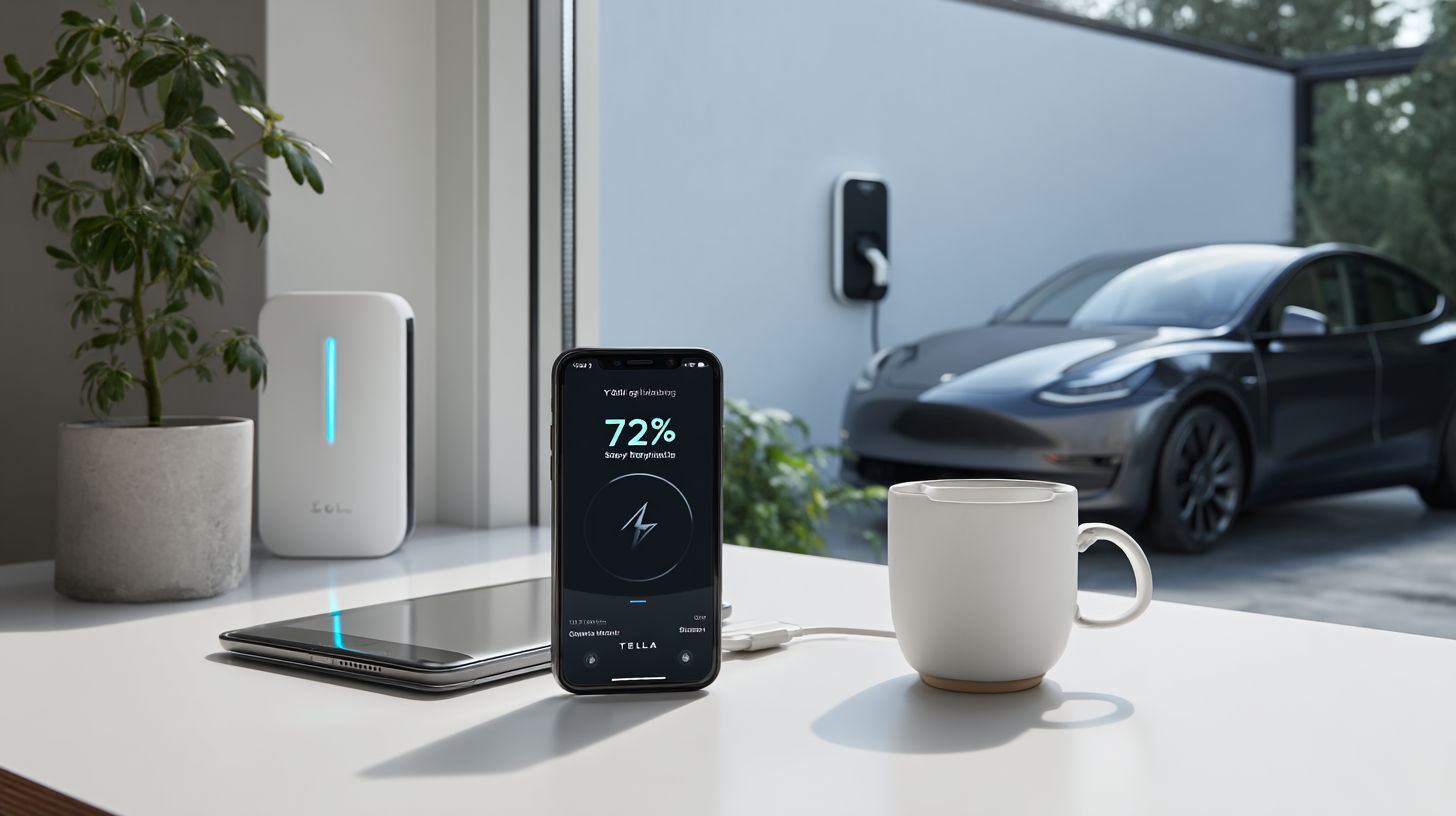

When solar generation is insufficient - shorter winter days, overcast weather, or the vehicle arriving home after dark - a well-configured charger should switch automatically to off-peak grid charging rather than drawing at standard rates.
The Zappi can connect to smart tariff APIs such as Octopus Intelligent, which provide half-hourly pricing data in advance. The charger can then schedule overnight charging to coincide with the cheapest available windows. The resulting cost per kWh and overall savings depend on your tariff, vehicle, usage pattern and electrical setup - actual savings vary and we do not guarantee specific figures. We confirm the integration pathway for your specific hardware at survey stage and advise on realistic expectations. See also our battery-linked EV charging page for information on combining solar, battery and EV charging.
.png?updatedAt=1768161832455)
A solar-diversion installation is technically more complex than a standard EV charger - it requires CT monitoring hardware at the incomer, a communication link to the charger, and dynamic load management to protect the main fuse across combined solar, EV and estate loads.
Where routing a CT data cable from the consumer unit through finished surfaces would compromise the property's aesthetic - period cornicing, oak flooring, or kitchen finishes - we deploy wireless CT hardware transmitting on a dedicated 868MHz radio frequency, eliminating the need for any additional conductor through the building fabric. Dynamic Load Balancing ensures the combination of solar generation, EV charging and all estate loads never exceeds the main fuse rating. DNO notification - required for any charger above 3.68kW on a PME supply - is submitted by our team on your behalf, with the reference number included in your handover pack.
.png?updatedAt=1754091291468)


"The Zappi was set up in Eco+ mode and the first week in June we charged the Tesla entirely from the panels - not a single unit from the grid. The wireless CT meant no extra cabling anywhere through the house. Installation was invisible and the commission was meticulous."
"We were sceptical about winter performance but the Octopus Intelligent fallback has been seamless. The car is reliably full by morning whether it was solar or off-peak grid. We have not thought about charging once since installation - exactly what we wanted."
"They configured all three charging modes and walked me through each one at handover. The ability to switch between 100% green and fast charge from the same app - depending on whether I need range urgently - is exactly right for how I use the car."
"The wireless CT solution was the deciding factor - no additional cabling through the kitchen at all. Installed in one day and generating free miles from the roof within 24 hours of commissioning. The technical quality of the work was clear throughout."
The proportion of EV charging that comes from solar depends on your array size, household consumption, vehicle type, daily mileage and - crucially - how many hours the car is parked at home during daylight. A solar diversion charger captures the overlap between generation peaks and parking hours. The result varies significantly between properties and seasons. We discuss realistic expectations for your specific system at survey stage.
The myenergi Zappi works with virtually any solar inverter via CT clamp monitoring. The SolarEdge EV charger integrates directly with SolarEdge inverters via the HD-Wave API - a tighter integration that can use generation data from the inverter directly. We specify the correct hardware for your inverter platform at survey stage.
A home battery can store surplus solar generation that occurs while the vehicle is away from home - for example, midday generation during working hours. When the vehicle returns in the evening, the battery can discharge to support EV charging. This can increase the proportion of solar-covered charging, though the benefit depends on battery capacity, vehicle schedule and household consumption patterns. See our battery-linked EV charging and battery storage pages.

Grant eligibility for EV chargers depends on charger hardware and installation type, not on solar diversion capability. Eligibility criteria and available schemes change over time. We advise on the current position at survey stage and assist with any relevant documentation as part of the installation process.
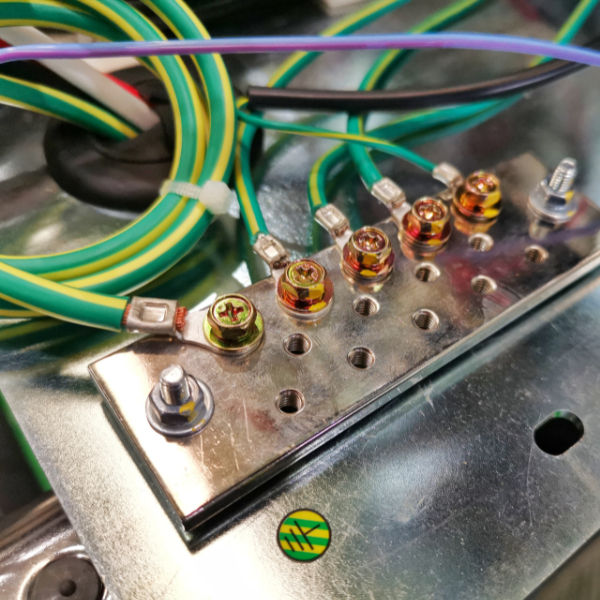
Outdoor EV chargers on PME (TN-C-S) supplies require PEN fault detection. Several solar-compatible chargers including the Zappi and SolarEdge EV charger include integrated protection. We confirm the earthing topology at survey and ensure the installation meets BS 7671 requirements without additional earth electrodes where the charger hardware already includes this protection.

Where running a CT data cable from the incomer to the charger would require disruption to finished surfaces, a wireless CT solution can eliminate the additional conductor entirely. We survey the radio path between incomer and charger position at the site visit to confirm wireless performance before specifying this route.
Only chargers with CT clamp monitoring capability can dynamically divert surplus solar generation into the vehicle. Standard smart chargers without this feature draw from the grid regardless of what your panels are generating, or require fixed timed schedules that cannot respond to real-time generation. We specify hardware including the Zappi and SolarEdge EV charger that communicates with your generation meter and adjusts charging current in real time based on live surplus.
A CT clamp installed at the main incomer measures net power flow in real time. When generation exceeds household consumption, the surplus that would otherwise be exported to the grid is detected and the charger automatically ramps its current draw to absorb it. On a clear day with the Zappi in Eco+ mode, the charger tracks generation variations within seconds - so a passing cloud reduces the charge rate immediately, and clears to restore it within moments.
Solar-diversion chargers can be configured to fall back to off-peak overnight grid charging when solar generation is insufficient. When integrated with a smart tariff, the charger schedules overnight charging to coincide with lower-cost periods automatically. The rates available depend on your specific tariff and energy supplier - we confirm compatibility at survey stage. See our battery-linked EV charging page for information on using stored battery energy to extend solar coverage further.
The CT clamp requires a monitoring connection from the main incomer to the charger. Where a physical cable run would compromise the property's aesthetic - through kitchen walls, period cornicing or finished oak flooring - we deploy wireless CT hardware using a dedicated 868MHz radio link that transmits consumption data without a single additional conductor through finished surfaces. The optimal method is confirmed at survey stage based on the radio path between incomer and charger position.

Connecting a solar array to an EV charger is a precision engineering task, not a simple cable run. The CT clamp position, the generation meter communication protocol, the charger firmware configuration and the DLB settings must all be specified correctly for the system to function as designed.
What a premium solar EV installation includes:
"The most valuable energy your panels generate is the energy that never leaves your property."