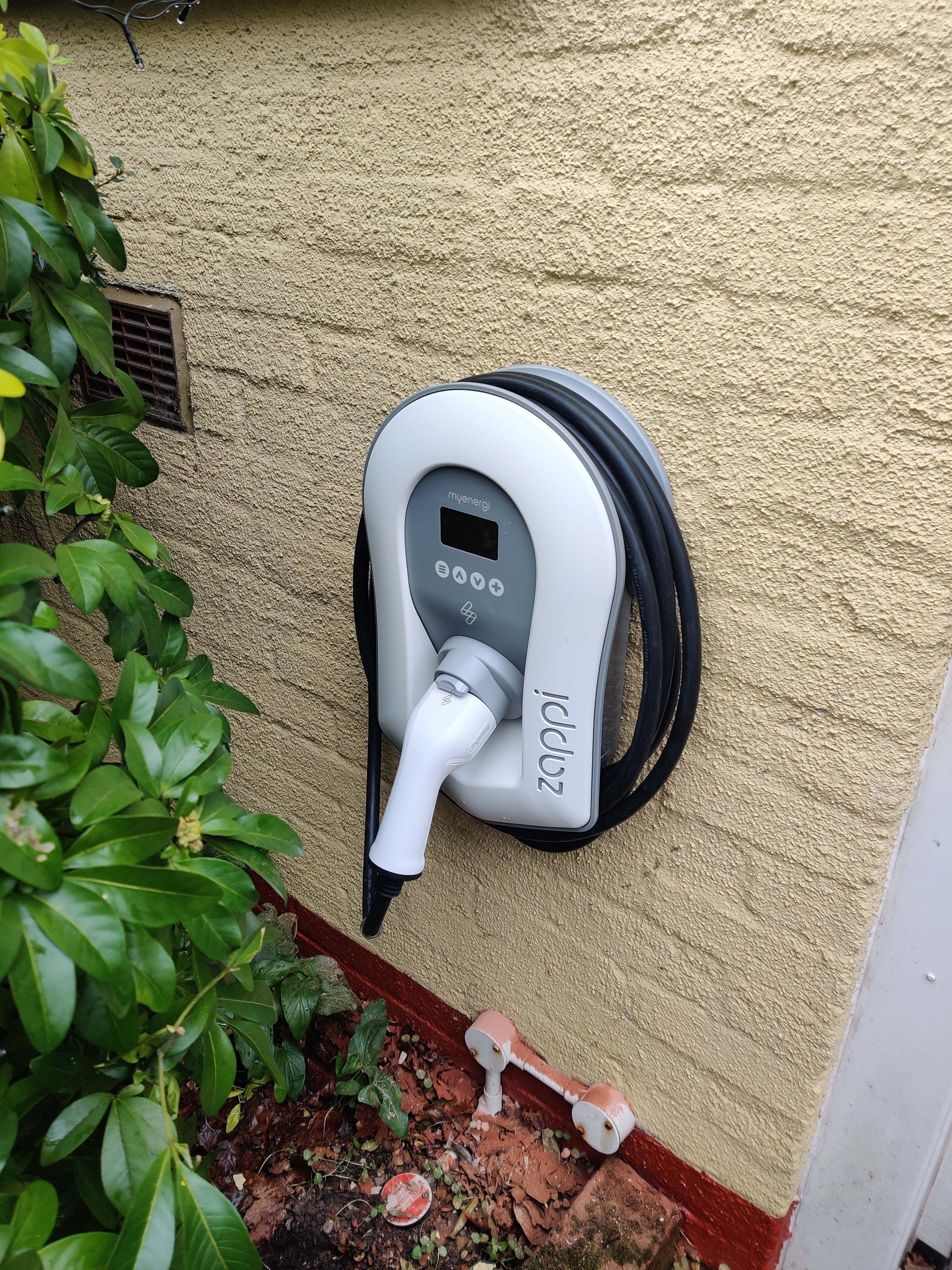
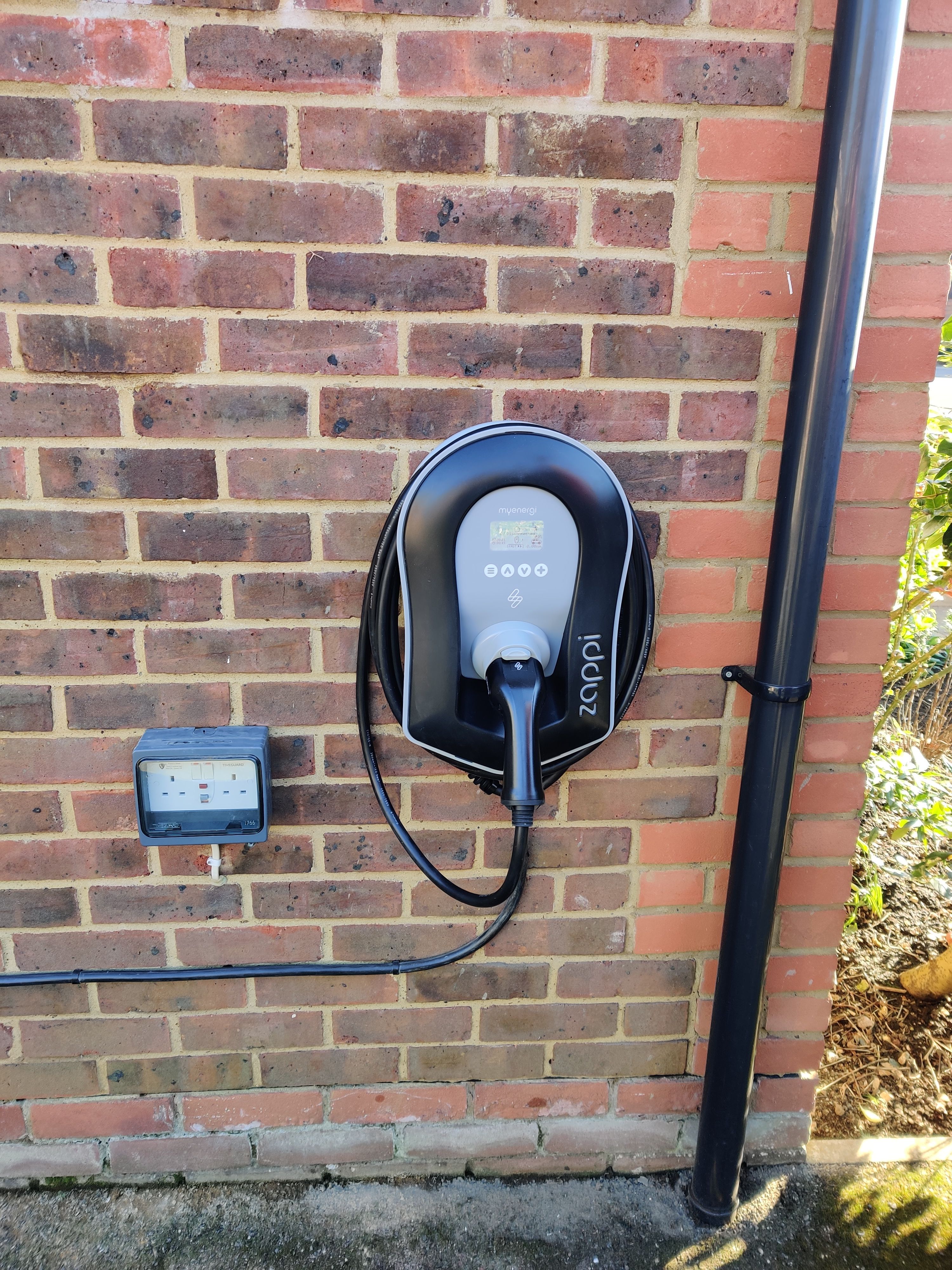
The "Dumb Charger" Problem - and How Battery-Linked Systems Solve It
Every home battery system is installed with a precise financial strategy: charge overnight from ultra-cheap grid power, discharge during peak hours to avoid expensive imports, and reserve a minimum threshold for emergency backup.
A standard EV charger connected to the same supply knows nothing of this strategy. When you plug in your Porsche Taycan, it draws at 7kW from whatever source has lowest impedance - which on many properties means the home battery. A 13.5kWh Tesla Powerwall depleted by EV charging at 7kW is empty in under two hours. The 4 to 8 GBP arbitrage saving that battery was positioned to execute that evening is forfeit. A battery-linked charger solves this by communicating with the battery energy management system, holding EV charging if the state-of-charge approaches the defined minimum threshold, and only drawing from the grid during confirmed off-peak windows when electricity costs less than the stored battery energy it would otherwise consume.
- Battery reserve protection: EV charging holds or throttles when battery state-of-charge approaches the defined minimum threshold
- Priority hierarchy enforcement: solar surplus first, battery reserve protected, grid power only from confirmed cheap overnight windows
- Conflict prevention: charger and battery operate as co-ordinated system components - not independent devices competing for the same supply
- Financial integrity: battery arbitrage strategy executes as designed every night, without EV charging disrupting the cycle


The Tesla Ecosystem - Wall Connector, Powerwall and One App
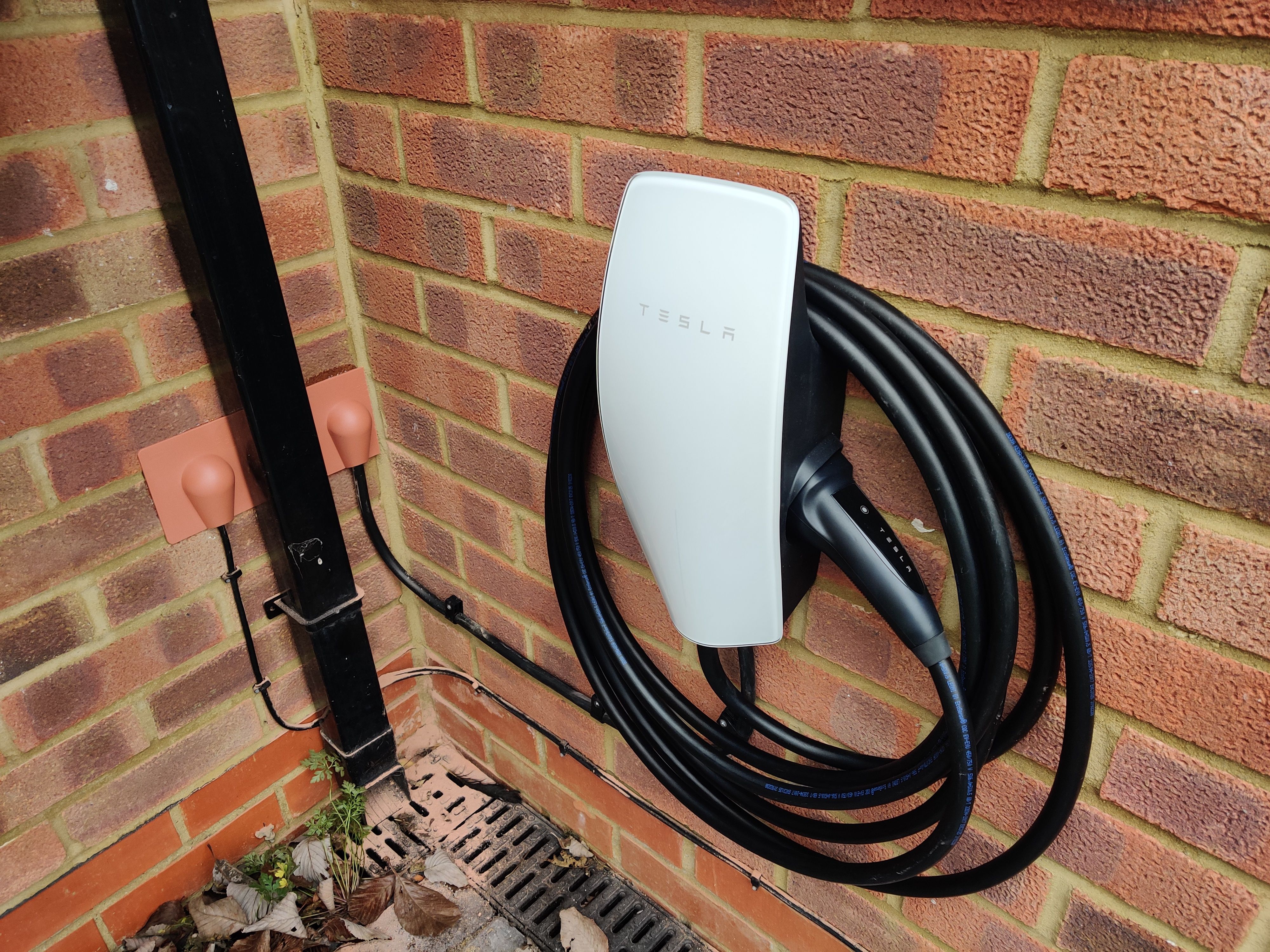
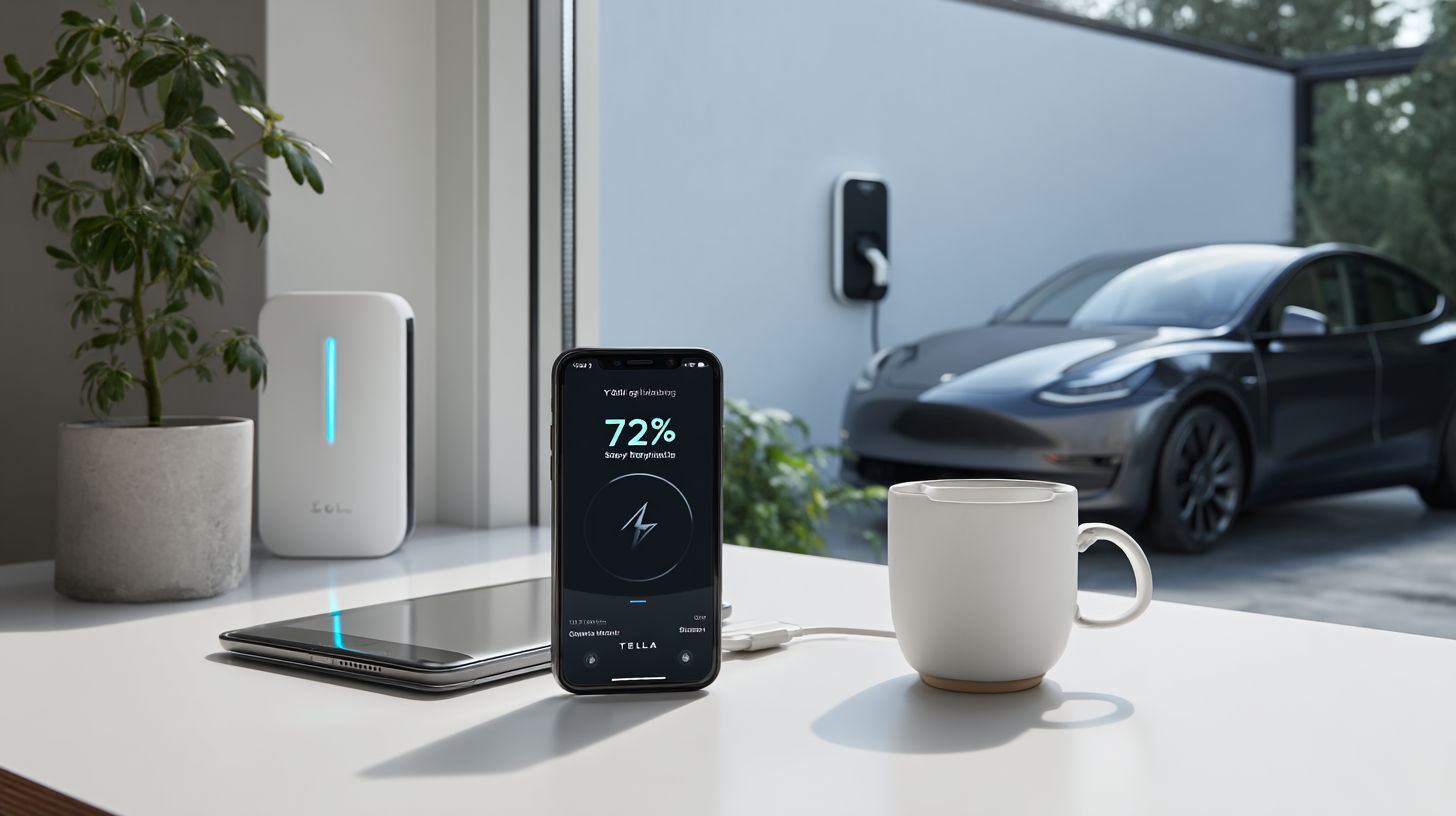
The most elegant battery-linked EV integration available to a luxury homeowner is the native Tesla ecosystem: a Tesla Wall Connector communicating directly with the Powerwall 3 Gateway, controlled from a single app.
When co-commissioned as a unified system, the energy routing is managed by the Powerwall Gateway rather than two separate systems attempting to co-ordinate. The Gateway receives generation data from the solar inverter, monitors the battery state-of-charge, and instructs the Wall Connector to charge from surplus solar when available, draw from battery power only within policy limits, or wait for the Octopus Intelligent off-peak window when grid rates fall to 7p per kWh. From the homeowner perspective, a single Tesla app shows solar generation, battery percentage and current charge rate on one screen - no platform switching, no operational complexity, no guesswork.
- Native Powerwall Gateway integration: Wall Connector controlled directly by the Powerwall EMS - no third-party bridges or separate commissioning required
- Single Tesla app visibility: solar generation, battery state-of-charge, EV charge rate and Octopus tariff status on one screen
- Reserve-aware routing: Gateway prevents Wall Connector from drawing battery below the defined minimum reserve percentage
- Tariff-intelligent scheduling: Octopus Intelligent integration routes EV charging to the cheapest verified off-peak window automatically
.png?updatedAt=1759443691047)

SolarEdge and Multi-Platform Orchestration
Not every battery-equipped estate runs the Tesla ecosystem. For properties with SolarEdge inverters, GivEnergy or SMA Sunny Boy Storage platforms, we specify and commission the correct battery-linked charger for the installed energy management system.
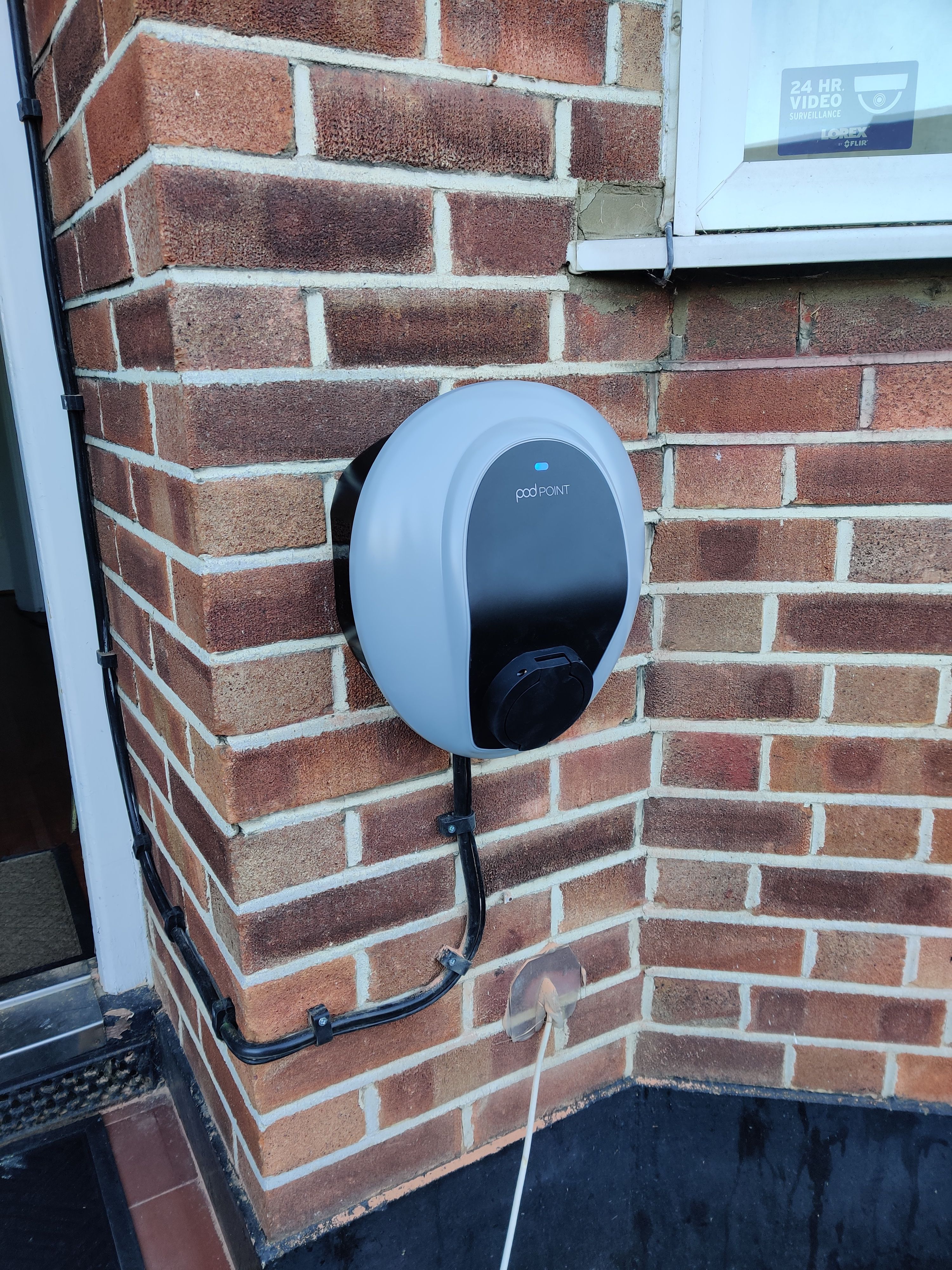
The SolarEdge EV charger integrates natively with the SolarEdge Home Hub inverter and Home Battery, giving the same unified app experience within the SolarEdge monitoring platform. For GivEnergy installations, the GivEnergy EMS allows priority rule configuration that holds or throttles EV charging whenever the battery state-of-charge approaches its reserve threshold. For properties with an existing EMS that lacks native EV charger integration, we specify compatible third-party chargers - including the Ohme Pro, which reads household load and battery status via API and adjusts its charging schedule accordingly. In every case, integration is verified under live conditions: priority rules tested, reserve thresholds confirmed, and app state verified before sign-off.
- SolarEdge native integration: SolarEdge EV charger linked to Home Hub for unified monitoring and solar priority routing within one platform
- GivEnergy EMS programming: priority rules configured to hold EV charging when battery reserve threshold is approached
- Ohme API integration: for mixed-platform estates, Ohme Pro reads battery and household load data via API to schedule charging intelligently
- Live commissioning verification: priority rules tested under actual generation and load before sign-off - not simulated from a datasheet


0% VAT, Dynamic Load Balancing and Flawless Aesthetics
Installing a battery-linked EV charger alongside an existing or new battery system unlocks three compounding advantages: significant VAT savings, rigorous infrastructure protection, and the same concealed aesthetic standard we apply to every premium installation.
The home battery storage component of any combined battery and EV charger project qualifies for 0% VAT under current HMRC legislation - applied to the battery hardware, cabling and installation labour at invoice. On a Tesla Powerwall 3 installation priced at 9,500 to 12,000 GBP, this saves 1,900 to 2,400 GBP at the point of commissioning. Dynamic Load Balancing ensures the main fuse is protected against the combined demand of a simultaneously charging battery and EV charger - a CT clamp at the incomer monitors total live demand and throttles EV charge current if the combined load approaches the fuse limit. All cable routing is planned for full concealment before any work begins, preserving the architectural finish of your Surrey estate or SW London property.
- 0% VAT on battery hardware and labour: applied at invoice automatically - no client paperwork or HMRC claim required
- Typical saving on Powerwall 3 project: 1,900 to 2,400 GBP at the point of commission
- DLB across combined battery-EV load: CT clamp protects main fuse against simultaneous battery charge and EV demand spikes
- Fully concealed cable routes: SWA underground, void-threaded or steel-conduit paths planned before installation - no surface cabling on visible walls


.png?updatedAt=1768161832455)