Battery + Solar Systems: Engineer a Private DC-Coupled Microgrid for Total Estate Energy Autonomy

Book an Engineering Call

The Hybrid Battery Is the Master Brain. The Solar Array Is Its Premium Fuel Source.

Most energy systems are solar-first: panels generate electricity, the inverter converts it, and whatever remains charges the battery. A DC-coupled hybrid system inverts this hierarchy. The smart hybrid inverter and high-capacity battery are the central intelligence of your estate's private microgrid - managing generation, storage, dispatch, tariff scheduling, and grid interaction through a single brain. The solar array provides the premium free fuel. By installing battery and solar as one concurrent DC-coupled programme, pure DC power from the array flows directly into the battery without conversion losses, achieving round-trip efficiencies of 96 to 97 percent versus the 90 to 92 percent of a retrofitted AC-coupled system. In summer, the microgrid operates entirely on solar fuel - powering the estate during the day, filling the battery for evening and overnight use, and exporting any residual surplus to the grid. In winter, when solar yield drops to 1.5 to 2.5 kWh per day, the hybrid brain switches to grid trading mode automatically - charging overnight on Octopus Intelligent off-peak rates of 7 to 9p/kWh and dispatching during daytime and evening peak hours at 25 to 35p. The estate runs at maximum financial efficiency in every month of the year with zero manual management required.

Three Engineering Pillars of the DC-Coupled Hybrid System

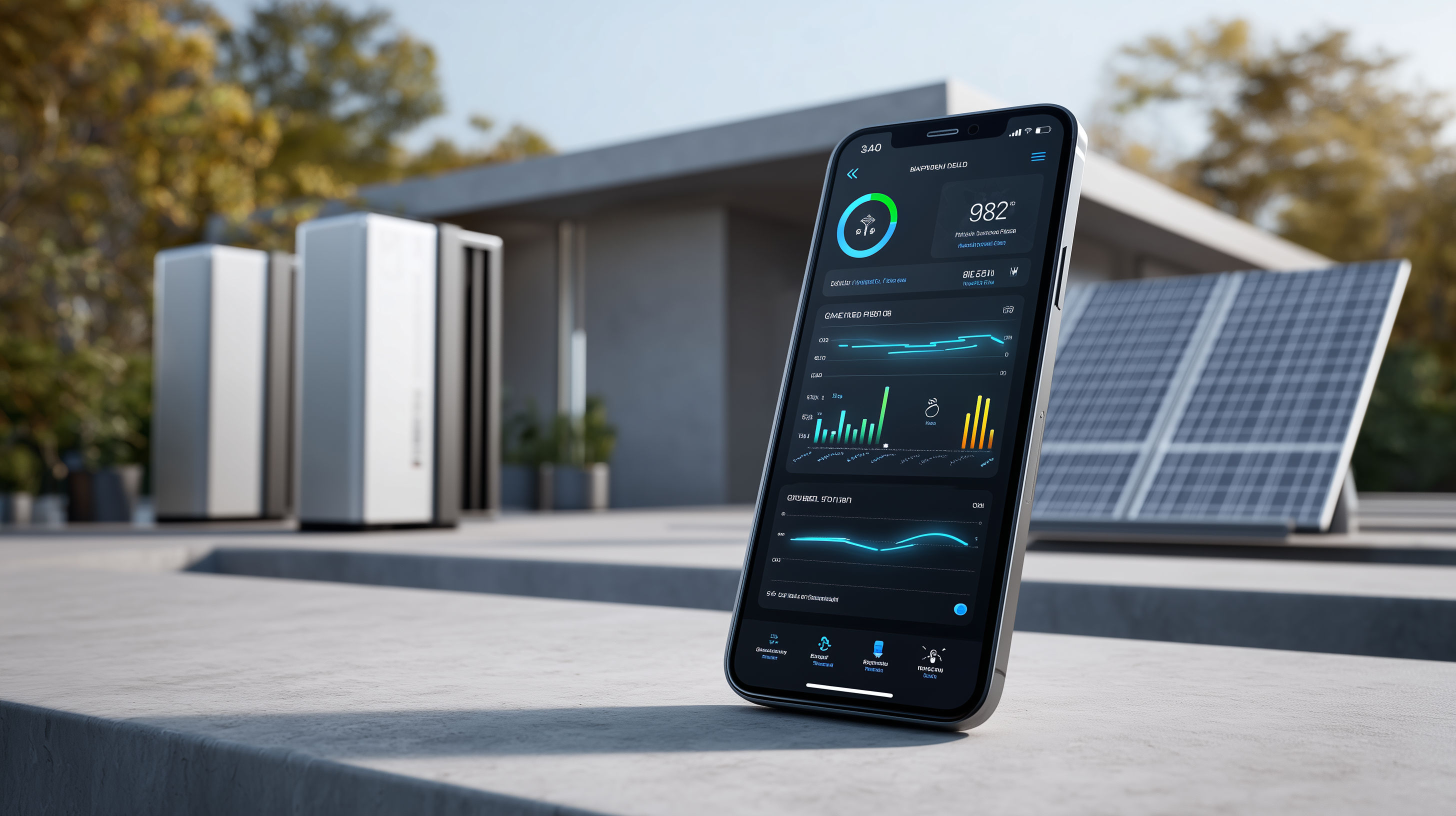
Home energy app showing solar import and export — battery discharge savings London MCS electricalworks

DC-Coupled Hybrid Architecture - 96% Round-Trip Efficiency

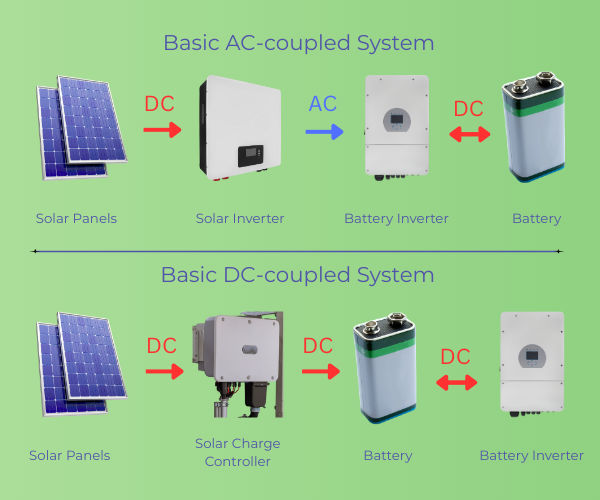
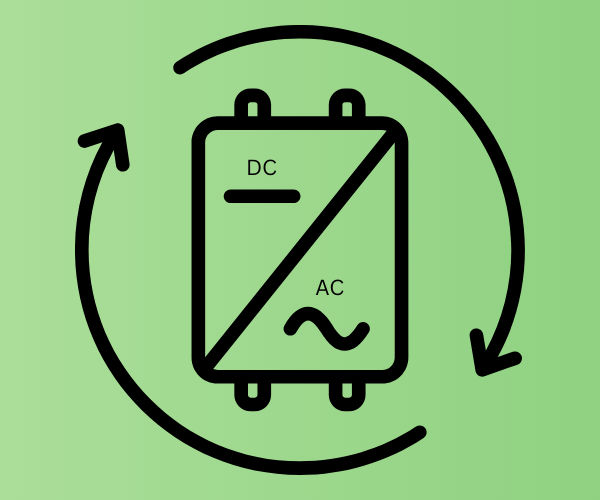
In a DC-coupled system, a single hybrid inverter handles both solar conversion and battery management. Pure DC power from the panels charges the battery directly without the double conversion penalty of a retrofit AC-coupled system. The result is 96 to 97 percent round-trip efficiency versus 90 to 92 percent for separate components - a 5 to 7 percent efficiency advantage that compounds across every kilowatt-hour generated over a 25-year asset life. For a Surrey 8kWp array generating 7,200 kWh annually, this efficiency differential recovers an additional 360 to 500 kWh per year - worth 90 to 175 GBP in avoided grid imports at current rates, entirely without additional hardware.

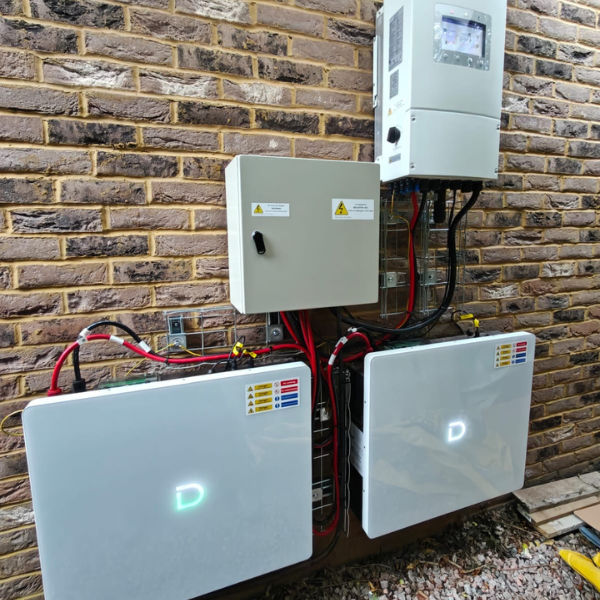
Wall-mounted lithium home battery with isolators — backup power for London homes G98 compliant MCS

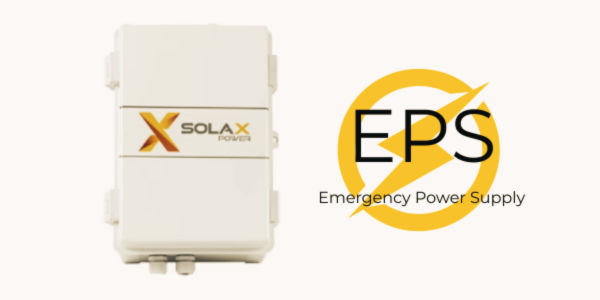
Solar-Recharged EPS - Infinite Backup Power for the Estate

A standalone battery provides backup power until it depletes - typically 12 to 24 hours under luxury estate consumption. A DC-coupled hybrid system eliminates this limitation entirely. During a grid outage, the hybrid inverter island-switches the property in under 20 milliseconds and continues managing the solar array independently. While the grid is down, your panels continue charging the battery in island mode throughout the day. In a Surrey summer with 8 or more hours of usable solar generation per day, the microgrid can sustain whole-estate supply indefinitely - with no generator fuel, no noise, no maintenance, and no manual intervention. Security arrays, Control4 automation, climate control, and server infrastructure remain continuously powered through any grid failure duration.

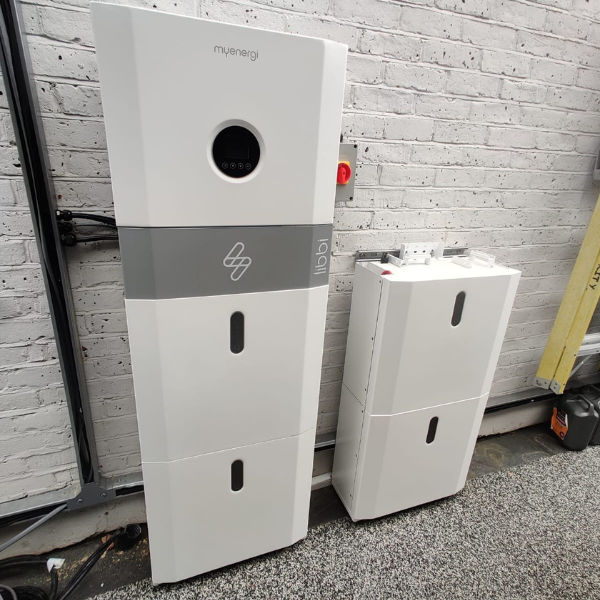
Retrofit AC-coupled battery beside existing solar — increased self-consumption London electricalworks

0% VAT on the Complete Hardware Stack

When battery storage and solar panels are installed as a single concurrent programme, HMRC classifies the entire project as a qualifying energy-saving installation under current residential legislation. This applies 0% VAT to the full hardware stack and all installation labour - hybrid inverter, battery modules, solar panels, mounting system, DC cabling, consumer unit amendments, and all NAPIT engineer time. On a Surrey hybrid system investment of 18,000 to 28,000 GBP, this immediate capital saving of 3,600 to 5,600 GBP at invoice is one of the most significant financial advantages available to residential energy investors in the UK. We confirm the correct VAT treatment in writing at quotation stage before any commitment is made.
Battery Partners

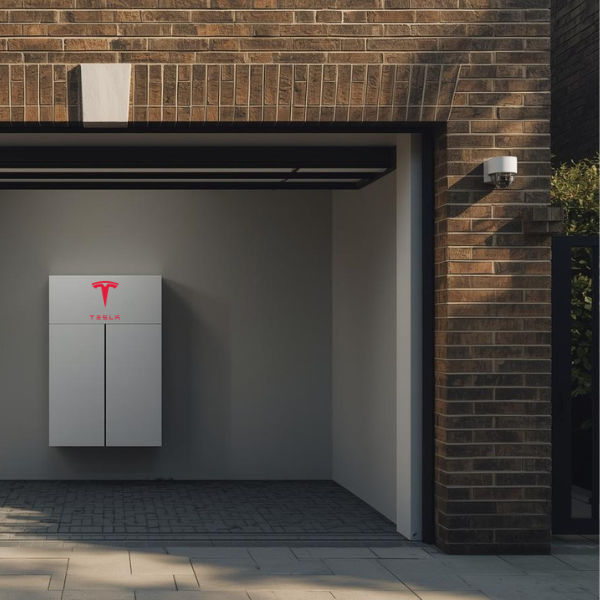
Tesla Wall Connector and Tesla Energy brand logo — solar-linked EV charging by MCS-certified electricalworks
SonnenBatterie home storage brand logo — AC-coupled batteries for London solar retrofits
SolarEdge HD-Wave inverter brand logo — shaded solar design with module-level optimisation London
LG solar module brand logo — high-efficiency PV panels installed by MCS electricalworks London
Trina Solar monocrystalline panel brand logo — MCS-certified rooftop arrays South and West London
Tesla Wall Connector and Tesla Energy brand logo — solar-linked EV charging by MCS-certified electricalworks
SonnenBatterie home storage brand logo — AC-coupled batteries for London solar retrofits
SolarEdge HD-Wave inverter brand logo — shaded solar design with module-level optimisation London
LG solar module brand logo — high-efficiency PV panels installed by MCS electricalworks London
Trina Solar monocrystalline panel brand logo — MCS-certified rooftop arrays South and West London
Tesla Wall Connector and Tesla Energy brand logo — solar-linked EV charging by MCS-certified electricalworks
SonnenBatterie home storage brand logo — AC-coupled batteries for London solar retrofits
SolarEdge HD-Wave inverter brand logo — shaded solar design with module-level optimisation London
LG solar module brand logo — high-efficiency PV panels installed by MCS electricalworks London
Trina Solar monocrystalline panel brand logo — MCS-certified rooftop arrays South and West London
Tesla Wall Connector and Tesla Energy brand logo — solar-linked EV charging by MCS-certified electricalworks
SonnenBatterie home storage brand logo — AC-coupled batteries for London solar retrofits
SolarEdge HD-Wave inverter brand logo — shaded solar design with module-level optimisation London
LG solar module brand logo — high-efficiency PV panels installed by MCS electricalworks London
Trina Solar monocrystalline panel brand logo — MCS-certified rooftop arrays South and West London

From Site Survey to Live Microgrid in One Coordinated Programme

Consumption and Generation Audit

We retrieve your half-hourly Smart Meter consumption data and model roof irradiance from your specific postcode, pitch, and orientation. We map the generation surplus against your evening demand curve to establish the optimal array size and battery capacity for maximum self-consumption and arbitrage return.

Hybrid Inverter and Array Co-Design

We select the hybrid inverter platform for confirmed Octopus API compatibility, battery expansion support, and EPS certified operation. The solar array is designed concurrently - string layout, module-level optimisation, and DC cable topology all engineered to the specifications of the chosen hybrid inverter for maximum system coherence.

Single-Programme DC-Coupled Installation

Our directly-employed NAPIT master electricians install the solar array, hybrid inverter, and battery as one co-ordinated programme. One DNO G98/G99 submission, one scaffolding mobilisation, one MCS commissioning event, and one 0% VAT invoice covering the full hardware stack and all installation labour.

Tariff Commissioning and Live Microgrid

We configure Octopus Intelligent scheduling, verify solar surplus capture and EPS island-switching are operating correctly, complete Smart Export Guarantee registration in your name, and issue all manufacturer warranty documentation before engineers leave. Your microgrid is live and financially optimised from commissioning day.

The Engineering Detail of a DC-Coupled Hybrid System

DC-Coupled Hybrid Architecture - The Efficiency Advantage

In a DC-coupled system, pure DC power from the solar array flows directly into the battery without conversion - eliminating the 5 to 7 percent efficiency penalty of an AC-coupled retrofit.

A single hybrid inverter handles both solar conversion and battery management. There is no AC-to-DC-to-AC conversion cycle. Tesla Powerwall 3, SolarEdge Home Hub, and GivEnergy AIO are all DC-coupled platforms where the inverter and battery share a single DC bus - generation, storage, and dispatch managed by one intelligence layer through one app.

  • 96 to 97% round-trip efficiency: versus 90 to 92% for AC-coupled retrofit systems
  • Single inverter architecture: no compatibility risk between separate solar and battery components
  • One app, one platform: generation, storage, tariff scheduling, and EPS controlled through a unified interface
  • 25-year module warranties: manufacturer-backed coverage valid throughout the full finance term
AC-coupled battery inverter schematic - retrofit battery on existing solar London MCS DC-coupled battery with hybrid inverter - higher round-trip efficiency new solar London electricalworks

Capacity Engineering - Sizing the Battery Brain Against Your Load Profile

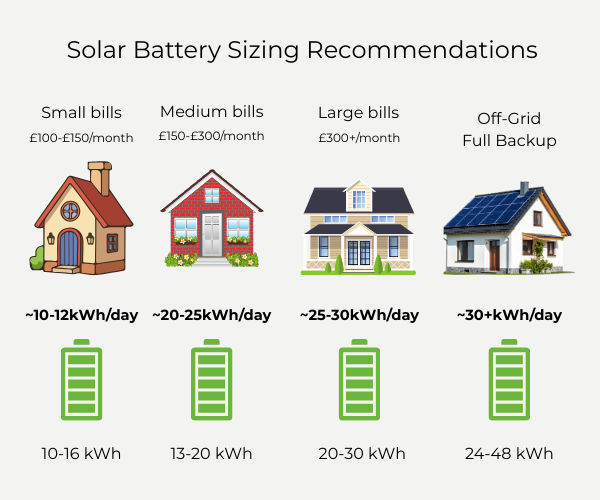
Battery capacity is sized against your actual half-hourly consumption curve, your roof's seasonal irradiance profile, and your resilience requirements - not against a generic kWh default.

We retrieve 12 months of Smart Meter half-hourly data and model your load curve across every month of the year. A Surrey 5-bedroom property with a heat pump, EV charger, and home office has a fundamentally different battery sizing requirement from a SW London townhouse. We calculate the capacity that maximises solar self-consumption, sustains overnight discharge, and maintains your required EPS reserve hours simultaneously.

  • Half-hourly Smart Meter analysis: actual load curve mapped across 12 months before any sizing decision
  • Seasonal irradiance modelling: array size calculated for your specific roof geometry and postcode
  • EPS reserve calculation: critical load requirements modelled to confirm backup duration
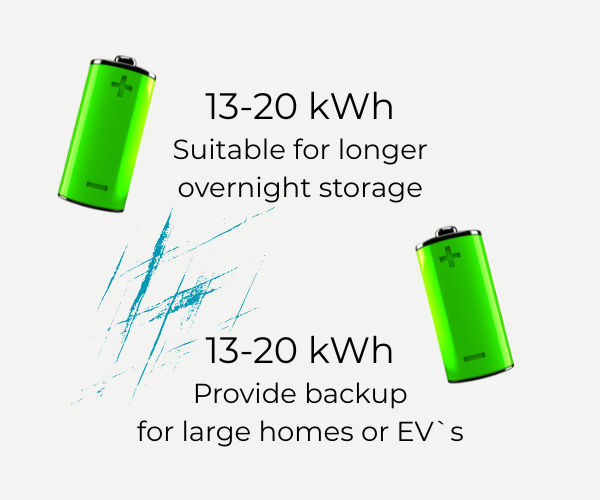
  • Modular expansion: capacity can be increased in year 3 or 5 without replacing the inverter
Battery kWh sizing calculator on tablet - load profile and overnight coverage London MCS design Modular battery stack expansion - scalable kWh for growing EV and heat pump loads London

Solar-Recharged EPS - Infinite Backup Power When the Grid Fails

A standalone battery provides backup until it depletes. A DC-coupled hybrid system eliminates that limit - the solar array continues recharging the battery in island mode throughout any grid failure.

During a grid outage, the hybrid inverter island-switches the property in under 20 milliseconds. The solar array continues operating and charging the battery autonomously while the grid is down. In a Surrey summer with 8 or more usable generation hours per day, the microgrid can sustain whole-estate supply indefinitely - with no diesel, no noise, and no manual intervention.

  • Sub-20ms island switching: Tesla Powerwall 3 Gateway and SolarEdge Home Hub transition before any controller registers an anomaly
  • Solar recharge in island mode: panels charge the battery during daylight hours even while the grid is disconnected
  • Whole-estate coverage: security, climate, automation, and servers continue without interruption
  • PAS 63100 compliance: heat detection, fire-rated penetrations, and full safety documentation issued on completion
Battery installed in ventilated utility room - clearance and fire regulation compliance London Heat and smoke detection near battery store - insurance and DNO best practice London install

Smart Tariff Synchronisation - Winter Grid Trading When Solar Falls

In winter, when Surrey solar generation drops to 1.5 to 2.5 kWh per day, the hybrid brain automatically shifts to grid trading mode - filling the battery overnight at 7 to 9p/kWh and dispatching during peak hours at 25 to 35p.

The hybrid inverter connects to the Octopus Energy API and receives half-hourly pricing data 24 hours in advance. It schedules battery charging during the cheapest overnight windows automatically. No timers, no manual management, and no seasonal adjustment required from you. Annual tariff reviews ensure the configuration remains optimal as pricing structures evolve.

  • Octopus API integration: half-hourly pricing data received 24 hours ahead and actioned automatically
  • Winter arbitrage return: 400 to 600 GBP per year from grid trading independent of solar generation
  • Summer self-consumption: 75 to 90% self-consumption rate on a correctly sized Surrey system
  • Annual tariff reviews: Octopus programme reviewed annually to remain optimal as pricing evolves
Agile import export grid trading screen - battery arbitrage with Octopus-class tariffs London SMETS2 smart meter with CT clamps - accurate import export for battery control London MCS

Client Success Stories

James O.

Wimbledon, SW19

★★★★★

"We installed a full SolarEdge Home Hub system with an 8kWp array and 9.7kWh battery. The DC-coupled architecture was explained clearly and the efficiency difference versus a retrofit is measurable in the monitoring data. Self-consumption is running at 88 percent since commissioning in April. The installation was immaculate - no visible cabling anywhere and the utility room setup looks like something from a data centre."

Elena M.

Weybridge, Surrey

★★★★★

"Tesla Powerwall 3 with a 10kWp array. The solar-recharged backup capability was the key decision factor for us - we have a Control4 system, NAS servers, and CCTV that cannot afford any downtime. During the installation, the team tested the EPS island-switch before leaving. The transition is genuinely imperceptible. The Octopus Intelligent configuration was set up on commissioning day and the battery has been running autonomously ever since."

What Every Hybrid System Owner Should Understand

Battery cycle life versus depth of discharge chart — warranty expectations London MCS customers

DC vs AC Coupling - Why It Matters for New Installations

For a new combined installation, DC-coupling through a hybrid inverter is always the technically superior choice. The 5 to 7 percent efficiency advantage over AC-coupling compounds across every kilowatt-hour over a 25-year asset life. On a Surrey 8kWp array generating 7,200 kWh annually, this efficiency differential recovers an additional 360 to 500 kWh per year at no additional capital cost - worth 90 to 175 GBP per year in avoided grid imports at current rates. We specify DC-coupled hybrid platforms exclusively for all new combined battery and solar installations.

Hybrid inverter commissioning menu — battery charge limits and grid charge settings London

Battery Capacity vs Power Rating - Two Numbers That Define Your Microgrid

Capacity in kWh determines how long your estate runs on stored energy. Power in kW determines how many loads you can run simultaneously during discharge or EPS operation. A 13.5kWh battery with a 5kW power output cannot simultaneously power an induction hob at 7kW and an EV charger at 7.4kW. We model both the capacity requirement for your overnight and backup duration, and the peak power requirement for your simultaneous loads, before specifying any system.

Winter solar yield versus battery reserve — seasonal performance expectation London electricalworks

The 0% VAT Position on Combined Battery and Solar

When battery storage and solar panels are installed as a single concurrent programme, HMRC classifies the entire project as a qualifying energy-saving installation at 0% VAT. This applies to panels, hybrid inverter, battery modules, mounting hardware, DC cabling, and all installation labour. On an 18,000 to 28,000 GBP Surrey hybrid system, the 0% rate saves 3,600 to 5,600 GBP at invoice. This saving is built into the investment figure from the first financial model we provide, before any commitment is made.

Frequently Asked Questions

What is a DC-coupled hybrid system and why is it superior to a retrofitted battery?

A DC-coupled hybrid system uses a single inverter to manage both solar generation and battery charging on the DC side of the circuit. Pure DC power from the panels charges the battery directly without the double conversion penalty of an AC-coupled retrofit. Round-trip efficiency is 96 to 97 percent versus 90 to 92 percent for AC-coupling - a 5 to 7 percent advantage that compounds across every kilowatt-hour over a 25-year asset life. For new combined installations, DC-coupled hybrid architecture is always the technically superior and financially optimal choice.

Can the system keep running during a prolonged grid outage?

Yes. The solar-recharged EPS capability of a DC-coupled hybrid system is its most significant resilience advantage over a standalone battery. During a grid outage, the hybrid inverter island-switches your property in under 20 milliseconds. Your solar array continues generating and recharging the battery autonomously in island mode. In a Surrey summer with 8 or more usable generation hours per day, the system can sustain whole-estate supply indefinitely without any manual intervention. In winter, backup duration is limited to battery capacity - typically 12 to 24 hours under standard luxury estate consumption - which we model against your specific critical load profile during the pre-installation audit.

Can I add more battery capacity after the initial installation?

Yes. Every hybrid platform we specify supports modular battery expansion. A SolarEdge Home Hub, Tesla Powerwall Gateway, or GivEnergy AIO system can accept an additional battery module in year 3 or 5 without replacing the inverter or disrupting the existing installation. This is particularly relevant when an EV is added to the household, as the additional overnight charging load typically requires more battery capacity to maintain arbitrage cycling. We size and document the expansion pathway for your specific system at installation.

Does a combined battery and solar installation qualify for 0% VAT?

Yes. When battery storage and solar panels are installed as a single concurrent programme, HMRC classifies the entire project as a qualifying energy-saving installation at 0% VAT under current residential legislation. This applies to the full hardware stack - hybrid inverter, battery modules, solar panels, mounting system, DC cabling, and all installation labour - with no split invoicing or partial exemptions. On an 18,000 to 28,000 GBP Surrey hybrid system investment, the 0% rate saves 3,600 to 5,600 GBP at invoice. We confirm the correct VAT treatment in writing at quotation stage.

Commission Your Hybrid Battery and Solar System in Surrey or SW London