AC-Coupling Explained: Why Your Existing Inverter Stays Exactly Where It Is
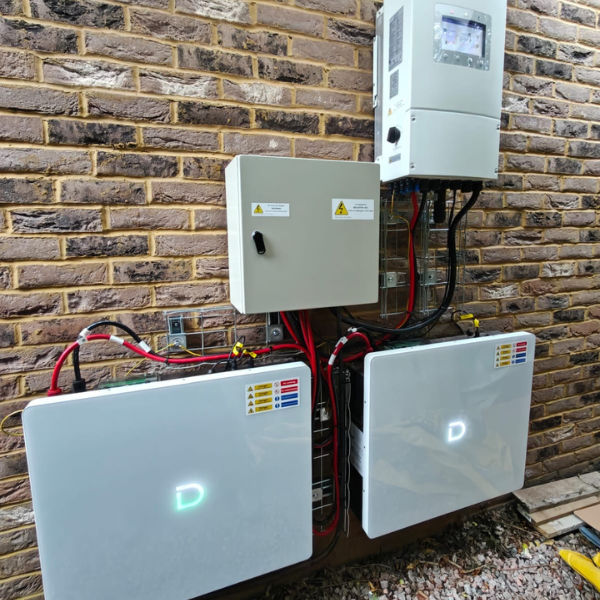
No roof work, no inverter replacement, no disruption to your existing warranty - the battery connects to the AC side of your circuit, completely independently of your solar equipment.
A standard string inverter has no battery port and was not designed to interact with storage. AC-coupling bypasses it entirely, connecting the battery at the consumer unit level. A current transformer sensor detects surplus solar generation about to leave the property and activates the battery to absorb it - with any solar brand, any inverter age, any panel configuration.
- AC-side connection: compatible with any solar inverter brand from any installation year
- CT sensor monitoring: real-time surplus detection activates charging before export reaches the meter
- Round-trip efficiency: 90 to 92% - capturing 91% of a 5p export always beats sending it to the grid
- Single-day installation: entire retrofit completed within the property with no scaffolding
Sizing the Retrofit Battery Against Your Actual Export Profile
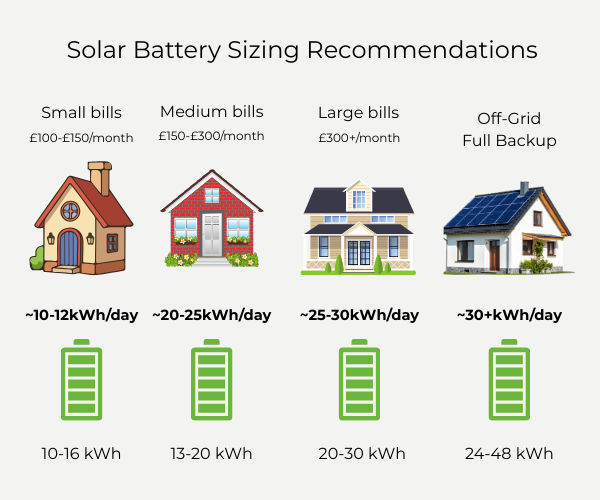
The correct battery capacity is determined by your actual export surplus, not your array size - and we model it from your real Smart Meter data before any recommendation is made.
We retrieve your half-hourly Smart Meter records for the preceding 12 months and map your generation surplus by season. A 4kWp south-facing Surrey array may export 12 to 15 kWh on a clear summer day, but only 1 to 2 kWh in December. Optimal sizing balances summer solar capture against year-round arbitrage cycling - not just the peak scenario.
- Half-hourly Smart Meter analysis: actual export profile mapped across 12 months before any sizing decision
- Summer vs winter balance: capacity optimised for solar capture and overnight arbitrage simultaneously
- EPS reserve included: resilience hours sized against your critical load requirements
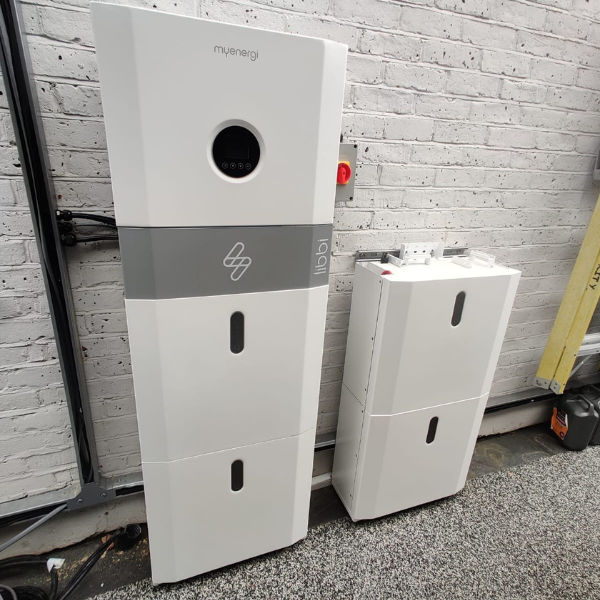
- Modular expansion: GivEnergy AIO supports a second unit in year 3 or 5 when an EV is added
The Octopus Intelligent Layer: Winter Arbitrage When Solar Generation Falls
Solar surplus capture in summer, grid arbitrage in winter - combined, the battery generates a financial return every day of the year regardless of weather.
Between November and February, Surrey solar averages 1.5 to 2.5 kWh per day. Without a grid arbitrage layer, the battery return profile collapses seasonally. Octopus Intelligent resolves this: the battery connects to the Octopus API and charges overnight at 7 to 9p/kWh automatically, then deploys during daytime and evening peak rates of 25 to 35p/kWh.
- Summer priority - solar capture: surplus generation absorbed before it reaches the export meter
- Winter priority - grid arbitrage: overnight Octopus charging delivers 400 to 550 GBP per year independent of sunlight
- Seamless seasonal transition: battery management switches modes automatically based on available generation
- Annual tariff reviews: Octopus configuration reviewed annually to remain optimal as pricing evolves
0% VAT, DNO Compliance, and the Full Retrofit Financial Model
Since October 2023, battery storage retrofitted to existing residential solar qualifies for 0% VAT - a direct capital saving of 1,400 to 2,000 GBP applied at invoice.
The zero rate applies to all hardware and labour with no minimum concurrent solar purchase required. Most residential AC-coupled retrofits qualify as Permitted Development, requiring only a G98 DNO notification rather than a full G99 application. We manage all compliance documentation as part of the installation programme.
- 0% VAT at invoice: battery, inverter, mounting, cabling, and labour all zero-rated
- G98 DNO notification: we assess and manage DNO compliance including any existing export limitation conditions
- Pre-commitment financial model: solar surplus recovery, arbitrage, SEG income, and 0% VAT adjusted cost across the full 10-year warranty period
- No existing warranty impact: written confirmation issued that the AC-coupled retrofit does not affect your solar panel or inverter warranties


.png)
.png)
.png)