






Octopus Intelligent Off-Peak Synergy - The Financial Mechanics
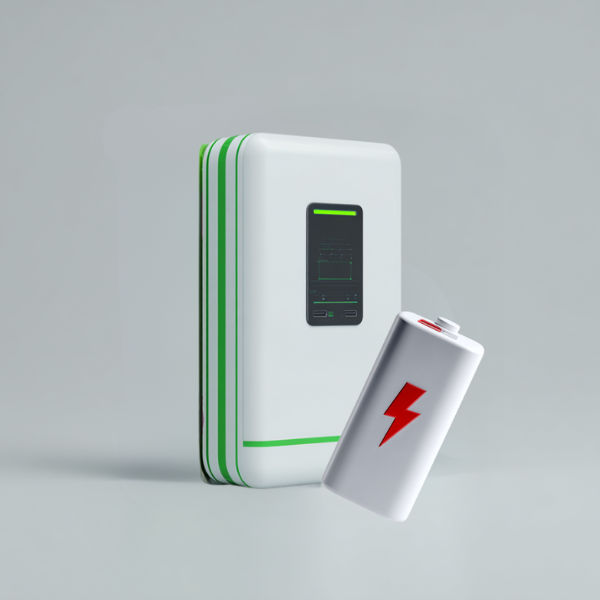
Between 23:30 and 05:30, the Octopus Intelligent API co-ordinates both the home battery and the EV charger to draw simultaneously from the grid at 7 to 9p/kWh - filling two storage vessels in one cheap overnight window.
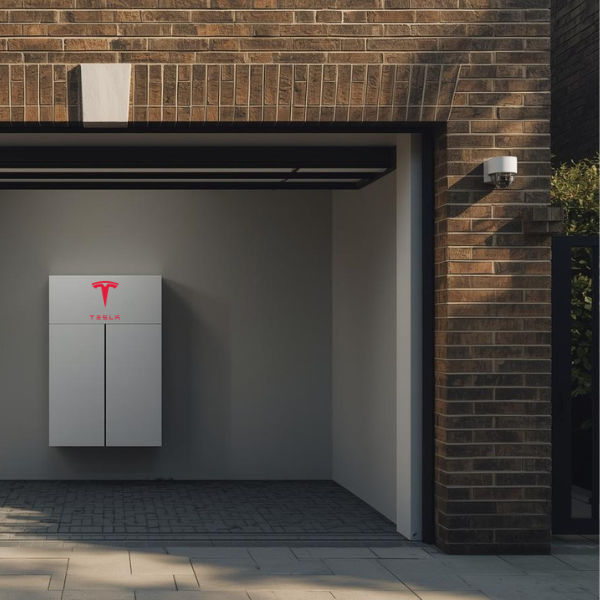
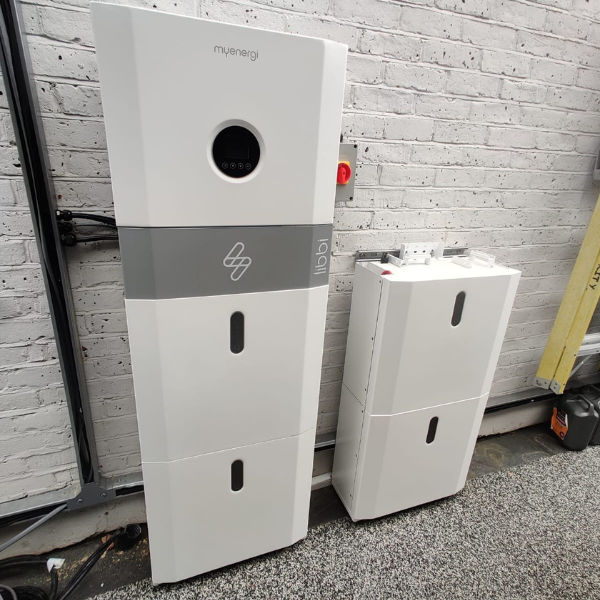
The home battery management system and the EV charger both connect to the Octopus API. The API receives half-hourly grid pricing data 24 hours ahead and schedules the optimal charge session for both devices within the guaranteed off-peak window. By 05:30, the Taycan or Model 3 is charged to target state and the home battery holds a full 13.5kWh of electricity purchased at under 9p/kWh - which then powers the estate throughout the day at full grid replacement value of 25 to 35p/kWh.
- EV full charge cost: under 85p for a Porsche Taycan on Octopus Intelligent versus 3.50 GBP at standard daytime rate
- Home battery fill cost: 13.5kWh at 8p = 1.08 GBP overnight versus 4.05 GBP at 30p/kWh daytime
- Combined annual saving: 1,800 to 2,400 GBP versus standard daytime charging for both vessels
- Zero management required: Octopus API schedules every charge session automatically
Dynamic Load Balancing - Protecting the Estate Supply Fuse
Simultaneously charging a 7.4kW EV and a 5kW home battery on a property already running heat pumps and climate control can exceed the incoming supply rating - dynamic load balancing prevents this automatically.
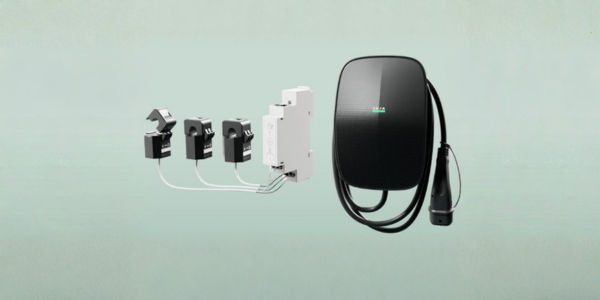
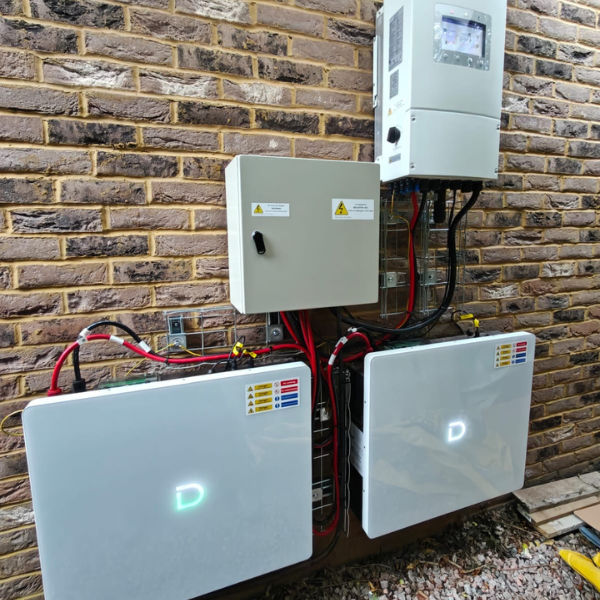
A current transformer installed on the main incoming tails measures total property current draw in real-time and feeds this data to both the battery inverter and the EV charger simultaneously. Both devices respond by modulating their charge rates to ensure total simultaneous demand never breaches the supply limit. When high-draw appliances cycle off, the chargers automatically increase back to maximum output.
- CT sensor monitoring: total estate demand measured in real-time at the main incoming tails
- Dual-device response: battery inverter and EV charger both receive and act on the CT data simultaneously
- No manual management: operates completely in the background with zero user intervention
- Maximum available charging: both devices run at full output whenever the infrastructure safely allows it
V2H-Ready Infrastructure - Preparing the Estate for Bidirectional EV Power
A Porsche Taycan holds 93kWh. An Audi Q8 e-tron holds 114kWh. These are not just transport assets - they are mobile energy reserves that will soon be capable of powering a luxury estate for three to five days.
Vehicle-to-Home technology requires specific consumer unit earthing topology, dedicated bidirectional charger circuits, and cable sizing capable of handling bidirectional high-current AC flow. We design and install every combined battery and EV charger system with this future capability pre-engineered into the infrastructure. When V2H chargers become widely available for premium EV platforms, your estate's electrical architecture will support them without structural rework.
- V2H earthing topology: consumer unit earthing designed for bidirectional operation from day one
- Bidirectional cable sizing: charger circuit cabling rated for both import and future export current requirements
- No rework required: infrastructure supports V2H charger hardware installation when available for your vehicle platform
- 93 to 114kWh potential reserve: premium EV battery capacity sufficient for 3 to 5 days of full estate autonomy
0% VAT on Battery Storage and Server-Grade Aesthetics Throughout
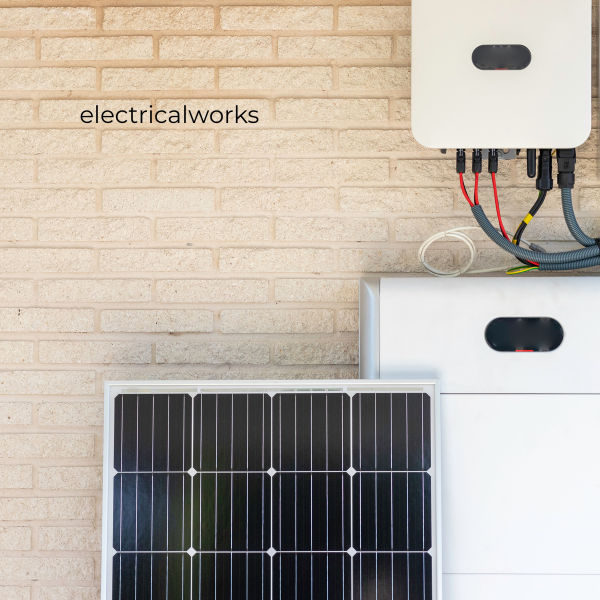
The home battery component of every combined installation qualifies for 0% VAT - a direct capital saving of 1,400 to 2,400 GBP at invoice, with no application or registration required.
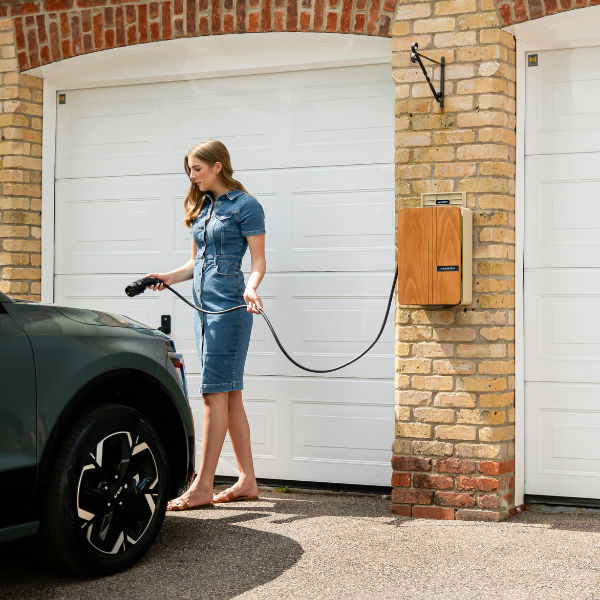
The aesthetic standard of the installation must match the standard of the property. EV charger cable routes are surveyed through building fabric before any work begins - roof voids, internal wall cavities, and underfloor channels where possible. The charger unit itself is specified for architectural compatibility: zappi for solar-diversion capability, Andersen A2 for heritage and period properties, or Tesla Wall Connector for Tesla owners requiring full vehicle integration.
- 0% VAT on battery: hardware, inverter, mounting, cabling, and labour all zero-rated at invoice
- Capital saving: 1,400 to 2,400 GBP on a typical Surrey battery installation
- Concealed cable routing: EV charger cabling surveyed through building structure before installation
- Premium charger selection: zappi, Andersen A2, or Tesla Wall Connector specified for your vehicle and property


.png)
.png)
.png)