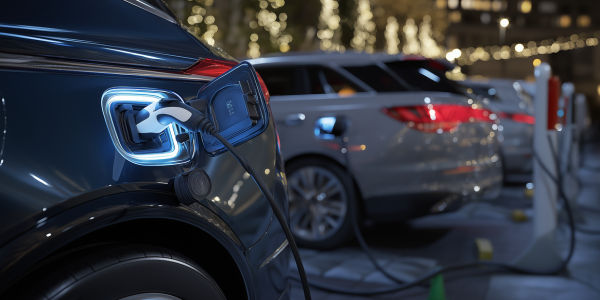
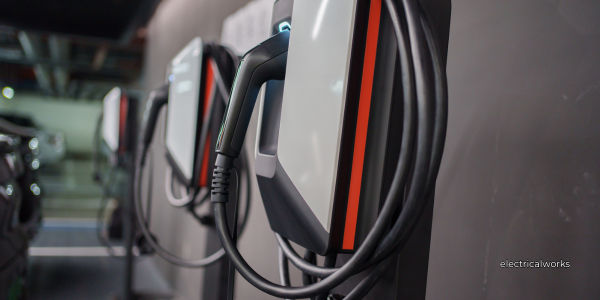
Your luxury EV holds up to 100kWh - seven times more than a standard home battery. We engineer the consumer unit topology, earthing discipline and cable sizing that transforms that sleeping asset into a commercial-grade power plant for your estate.
A premium home battery system holds 13kWh. Your Porsche Taycan holds 93kWh. Your Audi e-tron GT holds 93kWh. Your Range Rover PHEV holds 38kWh before a single solar panel generates a watt. The largest, most sophisticated energy store on your Surrey estate is already parked in your garage - and bidirectional charging is the precision engineering that puts it to work. Unlike a conventional EV charger that only draws from the grid, bidirectional hardware enables two-way energy flow: charging the vehicle when power is cheapest, and discharging it when power is most valuable - to your home, or directly to the National Grid.
Both Vehicle-to-Home (V2H) and Vehicle-to-Grid (V2G) require dedicated bidirectional charger hardware, a specific consumer unit earthing topology, and cable sizing rated for high-current AC flow in both directions. We commission this infrastructure from the outset on Surrey estates and SW London properties - so when bidirectional hardware becomes mainstream for your vehicle platform, your electrical architecture is ready. No structural rework. No replanning. No cost escalation.
V2H and V2G unlock the same vehicle energy reserve for entirely different strategic objectives. We specify the exact bidirectional topology for your property load profile, your vehicle platform, and your long-term financial priorities.
V2H turns your luxury EV into a dedicated home power plant. The bidirectional charger draws energy overnight on ultra-low Octopus Intelligent rates - filling the battery at 5p to 7p per kWh while you sleep. During peak daytime hours, it reverses flow, running your entire property directly from the vehicle battery at zero grid cost. A Porsche Taycan with 93kWh of usable capacity can sustain a large Surrey estate for three to five days in a full grid outage - without a single separate battery unit installed. The financial arithmetic is decisive: charging at off-peak and discharging at peak eliminates the majority of your household electricity bill from day one. We engineer the earthing topology, dedicated bidirectional circuit, and consumer unit protection architecture that V2H demands - so your estate is commissioning-ready, not retrofit-dependent.
V2G takes the V2H arbitrage principle one step further. When your vehicle holds surplus stored energy beyond your estate's consumption buffer, the bidirectional charger automatically exports that power back to the National Grid during high-demand peak windows. Your Porsche or Audi generates measurable yield while parked. As grid prices spike, the system dispatches energy and credits your account in real time. Residential V2G is now commercially available in the UK via platforms including the Wallbox Quasar 2. The regulatory pathway requires a formal G99 DNO application and export limiting coordination - a technical submission most installers cannot execute. We manage the complete G99 process as a standard element of every V2G commission, alongside the earthing topology, metering architecture, and bidirectional cabling the technology demands. Your vehicle does not just transport you. It trades for you.