1
Estate survey and load audit
We record live maximum demand, Ze readings, earthing topology and all cable route options. Load management requirements are confirmed before any hardware is ordered.
Treating a home EV charger as a properly assessed electrical project, rather than a bolt-on socket, is what separates a safe, trouble-free installation from one that causes problems later. This service is for homeowners across Surrey and SW London who want that assessment done properly; it starts with a survey of your supply capacity and consumer unit. A home EV charger is a new 32A continuous load on your property's electrical infrastructure - more than a simple socket. Installed correctly, it is safe, reliable and capable of working with solar panels, battery storage and smart tariffs. Installed without proper assessment, it can overload a supply that was not designed for it. We approach every installation as an electrical engineering project: assessing supply capacity, consumer unit condition, earthing arrangement and cable routes before any hardware is specified. Intelligent load management, concealed cable routing and smart tariff commissioning are included where relevant, and pricing depends on cable route complexity and any consumer unit work required, confirmed at survey stage. See also our EV charging hub and consumer unit services.
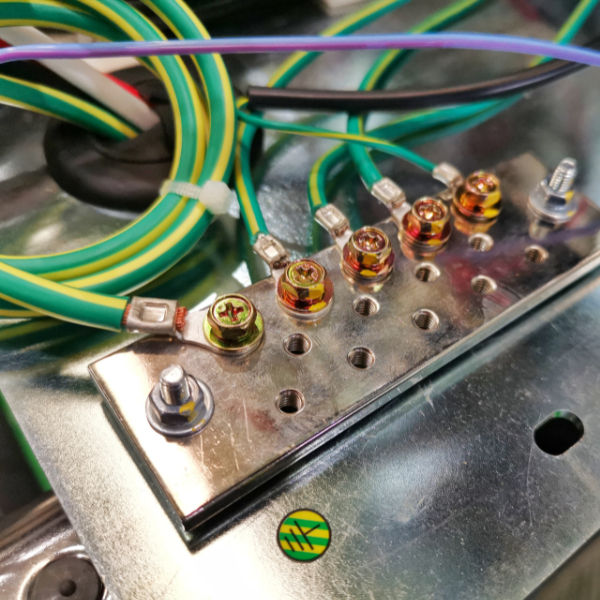
Every project begins with an honest assessment of your incoming supply, earthing arrangement and consumer unit condition. DNO notification - required for chargers above 3.68kW on PME supplies - is handled by our team and included in your handover documentation.

Route planning comes before hardware selection. Every cable is concealed within trunking, routed through building voids, or run underground - so nothing visible disturbs the property's appearance. We confirm the concealment method at survey stage, before any work is quoted.

Where relevant, we configure chargers to work with off-peak tariffs such as Octopus Intelligent and to prioritise surplus solar generation. The achievable savings depend on your tariff, vehicle usage, solar system and electrical infrastructure - we assess this before making any recommendations. See our solar-compatible EV chargers page.







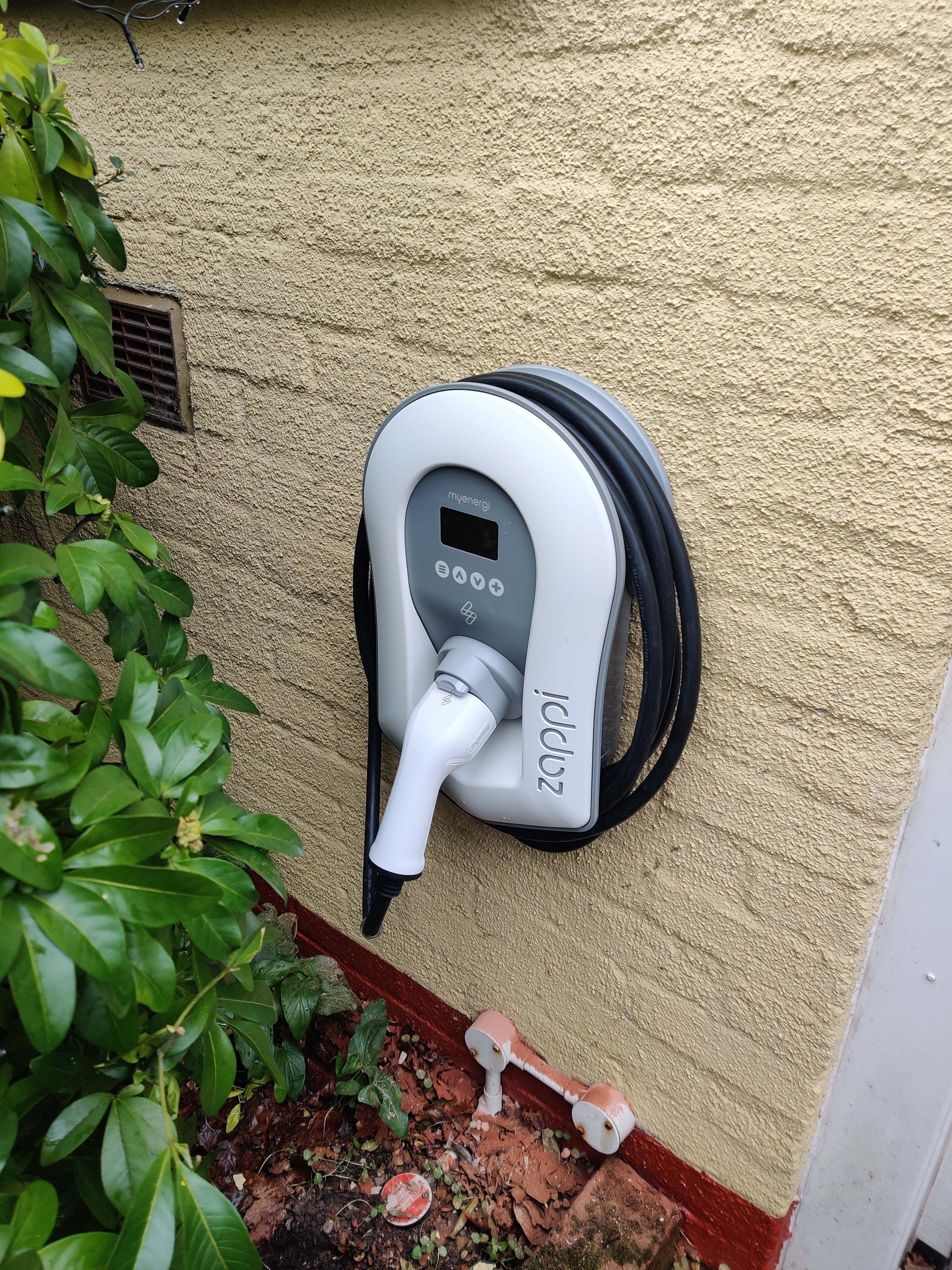
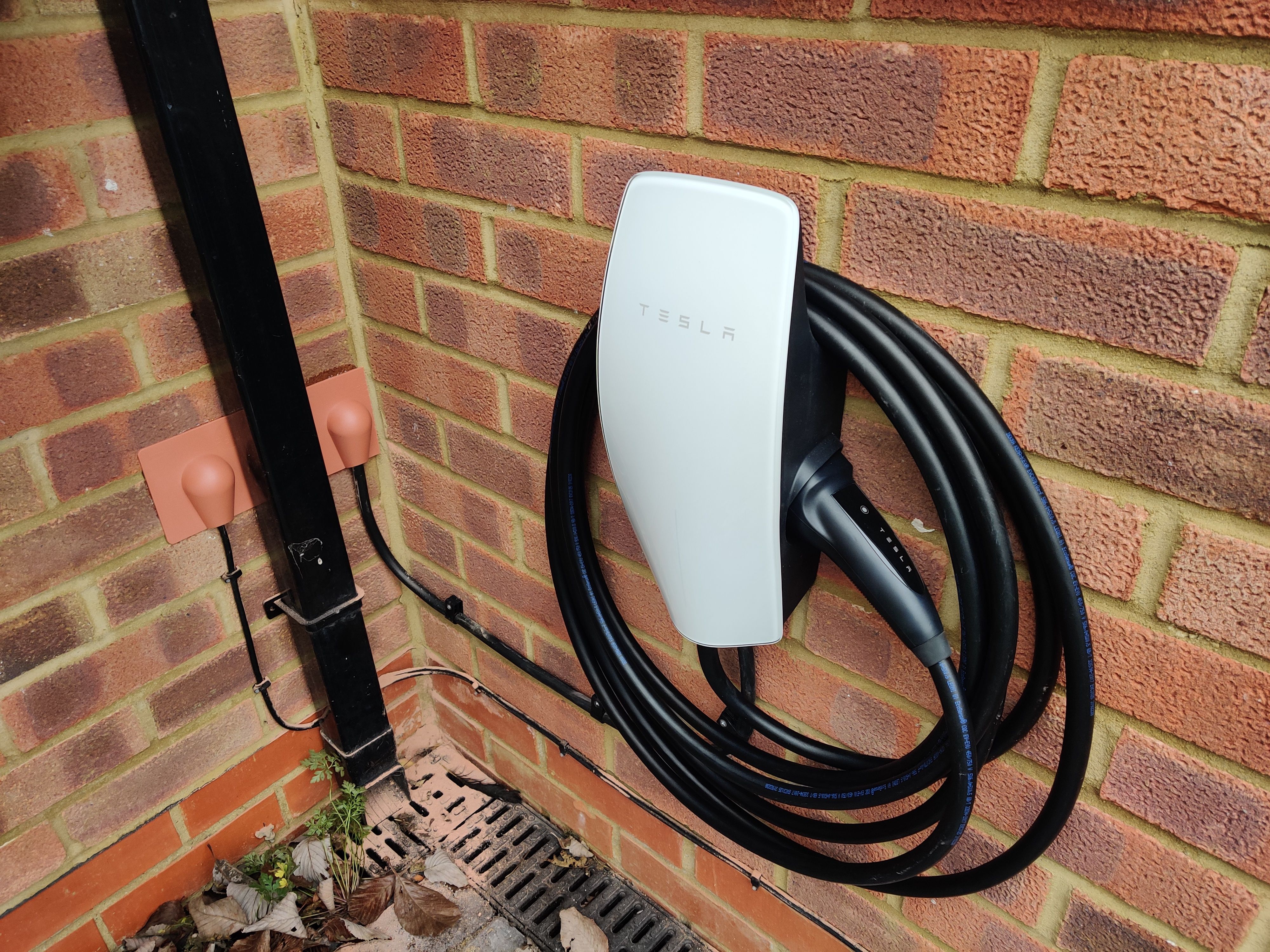
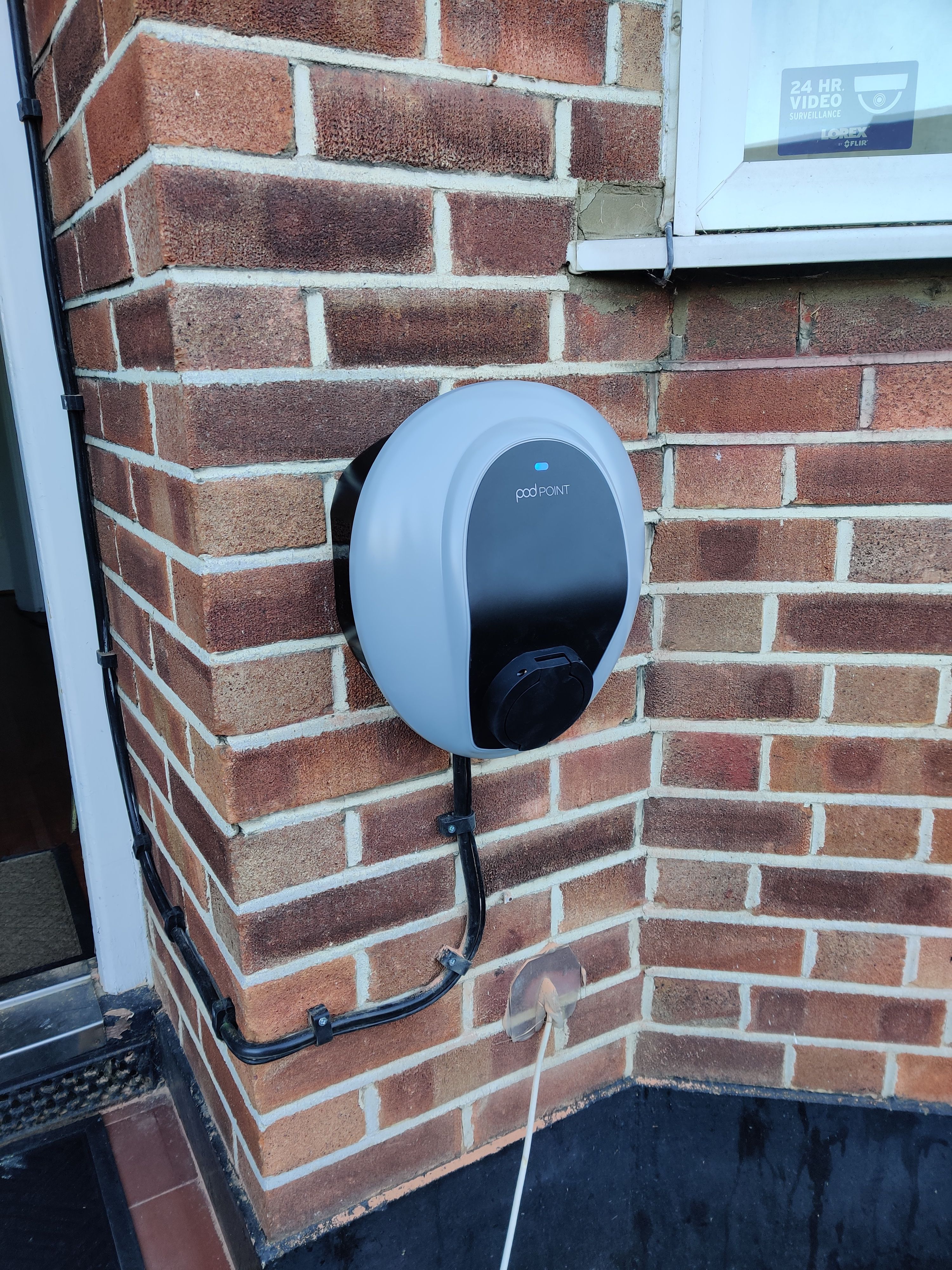
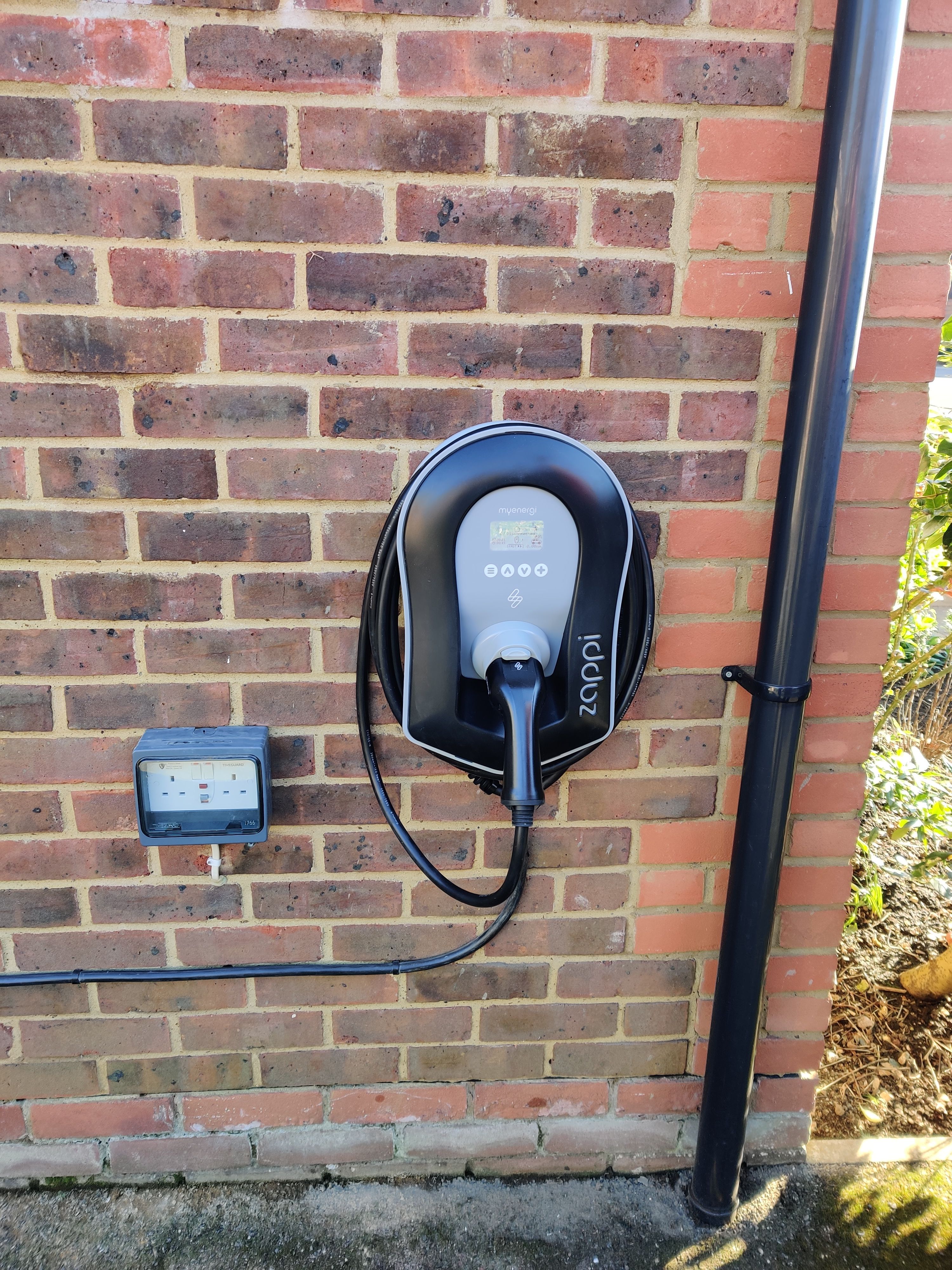
We record live maximum demand, Ze readings, earthing topology and all cable route options. Load management requirements are confirmed before any hardware is ordered.
Dedicated circuit, RCBO selection, cable sizing and Dynamic Load Balancing configuration - all documented and confirmed before installation day.
Cabling routed through agreed concealed paths, wallbox mounted and configured - including app pairing, Octopus Intelligent setup and DLB calibration.
Full insulation resistance, RCD trip timing and earth fault loop testing. EIC or Minor Works issued, with DNO notification handled by our team.
For a Surrey estate or SW London townhouse, the supply assessment is the most consequential step in the entire installation - carried out before a single product is specified or a price is quoted.
We record live maximum demand across every circuit, measure Ze and Zs at the proposed charger position, verify the earthing arrangement (TN-C-S, TN-S, or TT), and map the full cable route from consumer unit to parking position through the building fabric. This data determines whether a standard 7kW installation is straightforward, whether Dynamic Load Balancing is required to protect the main fuse, or whether a DNO supply upgrade should be factored into the programme.

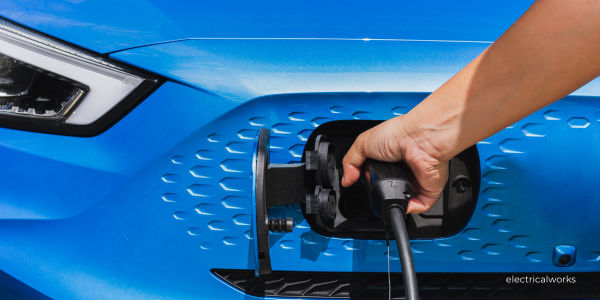
A luxury Surrey estate running simultaneously - heat pump, underfloor heating, premium kitchen, climate control and a 7kW EV charger - can draw close to or beyond a 100A single-phase fuse without active management.
Dynamic Load Balancing uses a CT clamp installed at the incomer to monitor the estate's total live power consumption every second. When other loads are heavy, the DLB firmware automatically throttles the EV charge rate from 32A down to a safe operating level - then restores full charge speed as headroom returns. The vehicle continues charging throughout: no session interruption, no nuisance trip, and no intervention required from the homeowner.
.png?updatedAt=1759443691047)

Architectural preservation is the primary engineering constraint on every Surrey and SW London installation we undertake - not an afterthought negotiated at handover.
Before any cable is pulled, our engineers walk every metre of the agreed route and confirm the concealment method: underground SWA through a concrete driveway, threading through existing voids in the building fabric, or powder-coated steel conduit where a surface run through a plant room or garage is unavoidable. The wallbox is then mounted at the agreed position and fully commissioned - Octopus Intelligent API credentials entered and tested, DLB calibration verified under live load conditions, and app pairing completed before the team leaves the site.
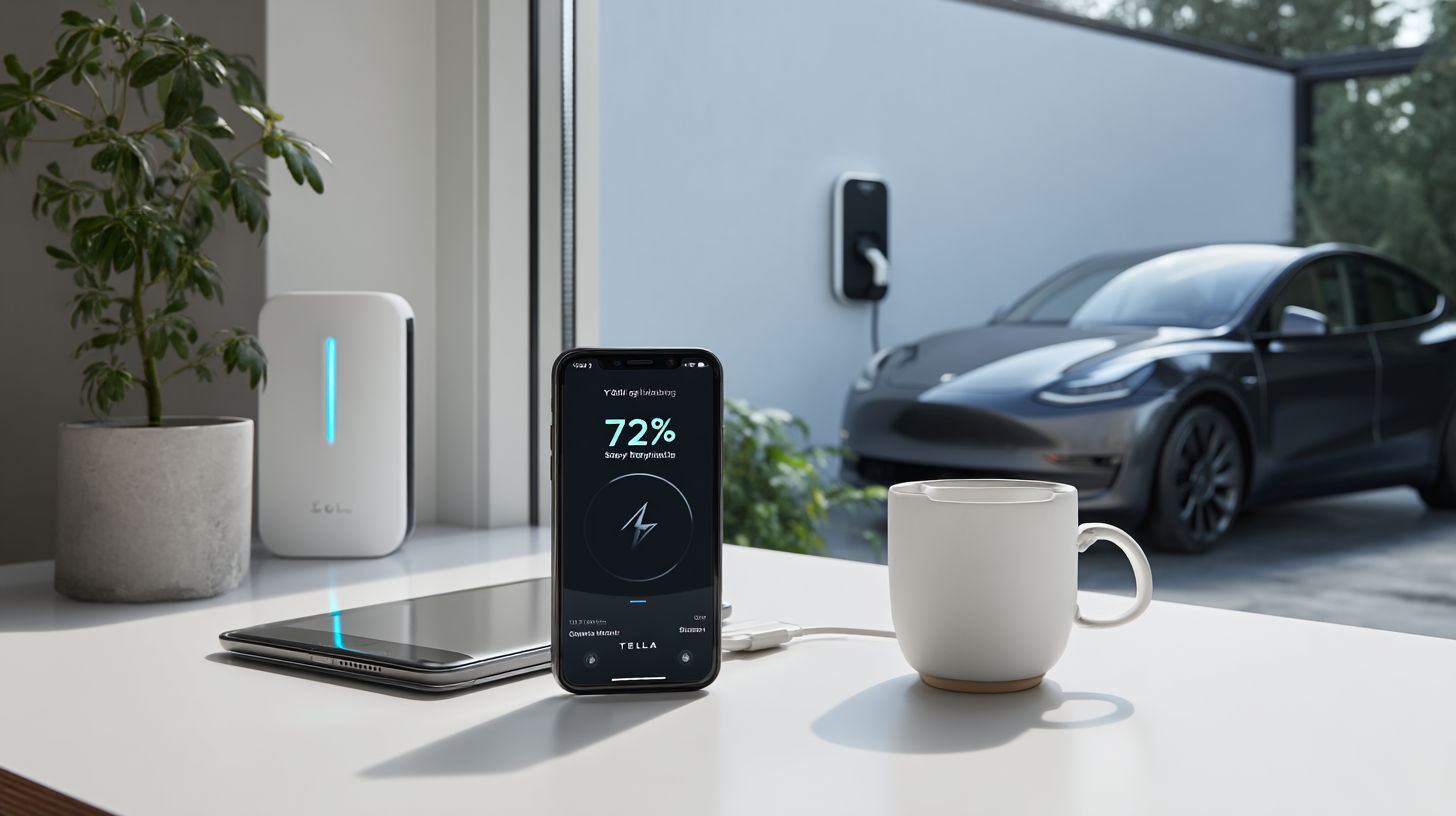
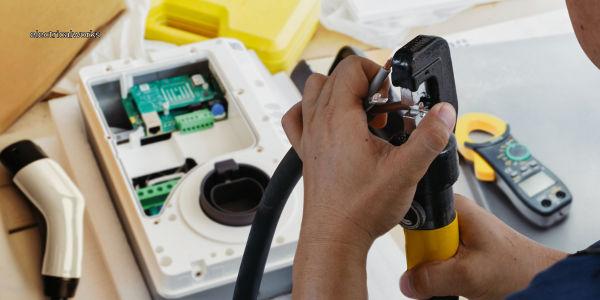
The test schedule and certification issued at the end of every installation are as important to your estate's records as the hardware itself - for insurance, warranty and future property transactions.
We conduct full BS 7671 verification on every conductor and protection device: insulation resistance, polarity, RCD ramp testing to confirm the 40ms trip time, and earth fault loop impedance measured against the maximum permitted value for the RCBO specified. Your Electrical Installation Certificate is issued on completion. DNO notification - a regulatory requirement for chargers above 3.68kW on PME supplies - is submitted to your Distribution Network Operator before the charger is energised, with the notification reference number included in your handover pack.



"The cable route through our garage is completely invisible - they found a path through the building fabric we would not have identified ourselves. Commissioned in a single day, app set up and running on Octopus before they left. Exactly the standard we expected."
"They were honest that our existing consumer unit did not need upgrading and explained exactly why. The Dynamic Load Balancing they specified handles the heat pump, the Porsche and the kitchen running together without a single trip. Technically thorough from start to finish."
"The Dynamic Load Balancing recommendation was exactly right. They calibrated it to our specific load profile and the charger has not conflicted with anything else in the house. Genuinely impressed by the level of detail in the commissioning process."
"They coordinated with our solar installer and configured the Zappi to prioritise surplus PV first, then fall back to Octopus Intelligent rates overnight. The level of detail in the commissioning was genuinely impressive - every setting explained and documented."
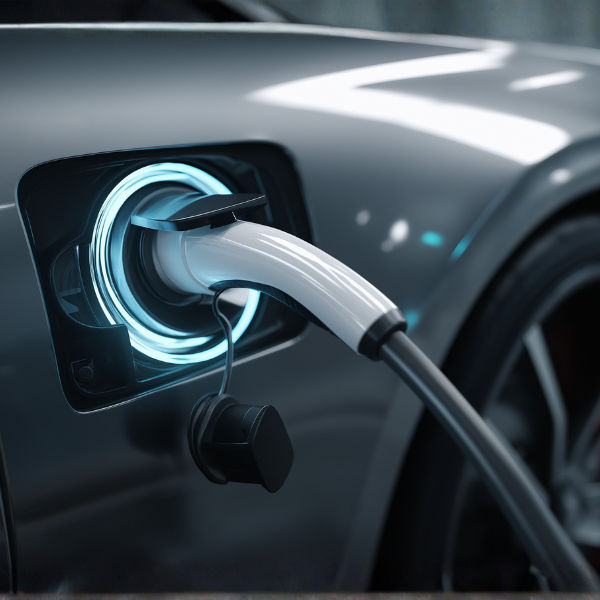
Most UK homes have a single-phase supply, which supports a 7kW charger and is sufficient to fully charge most EVs overnight. A 22kW charger requires a three-phase supply and a compatible onboard charger in the vehicle - not all EVs support 22kW AC. We recommend based on your specific supply and vehicle, not headline charge rates alone.

Tethered units with an integral cable offer convenience where one vehicle charges regularly on a dedicated stand. Untethered socket units suit households with multiple EV types or where a minimal aesthetic is preferred. We advise on the right configuration for your property and vehicles.
.png?updatedAt=1768161832455)
Compatible EV chargers can be configured to use off-peak tariff windows - such as Octopus Intelligent - to schedule overnight charging automatically. The rates and savings available depend on your specific tariff, vehicle and usage pattern. We confirm compatibility and commission the relevant settings as part of every installation.

Grant frameworks for EV charger installation change with government policy. Eligibility typically depends on property type, tenure and other criteria. We advise on the current position at survey stage and assist with any relevant documentation as part of the installation process.
Outdoor EV chargers on PME (TN-C-S) supplies require PEN fault detection to meet the requirements of BS 7671. Several modern wallboxes include this as an integrated feature, removing the need for a separate earth electrode in your garden. We confirm the earthing arrangement at survey stage and specify protection accordingly.
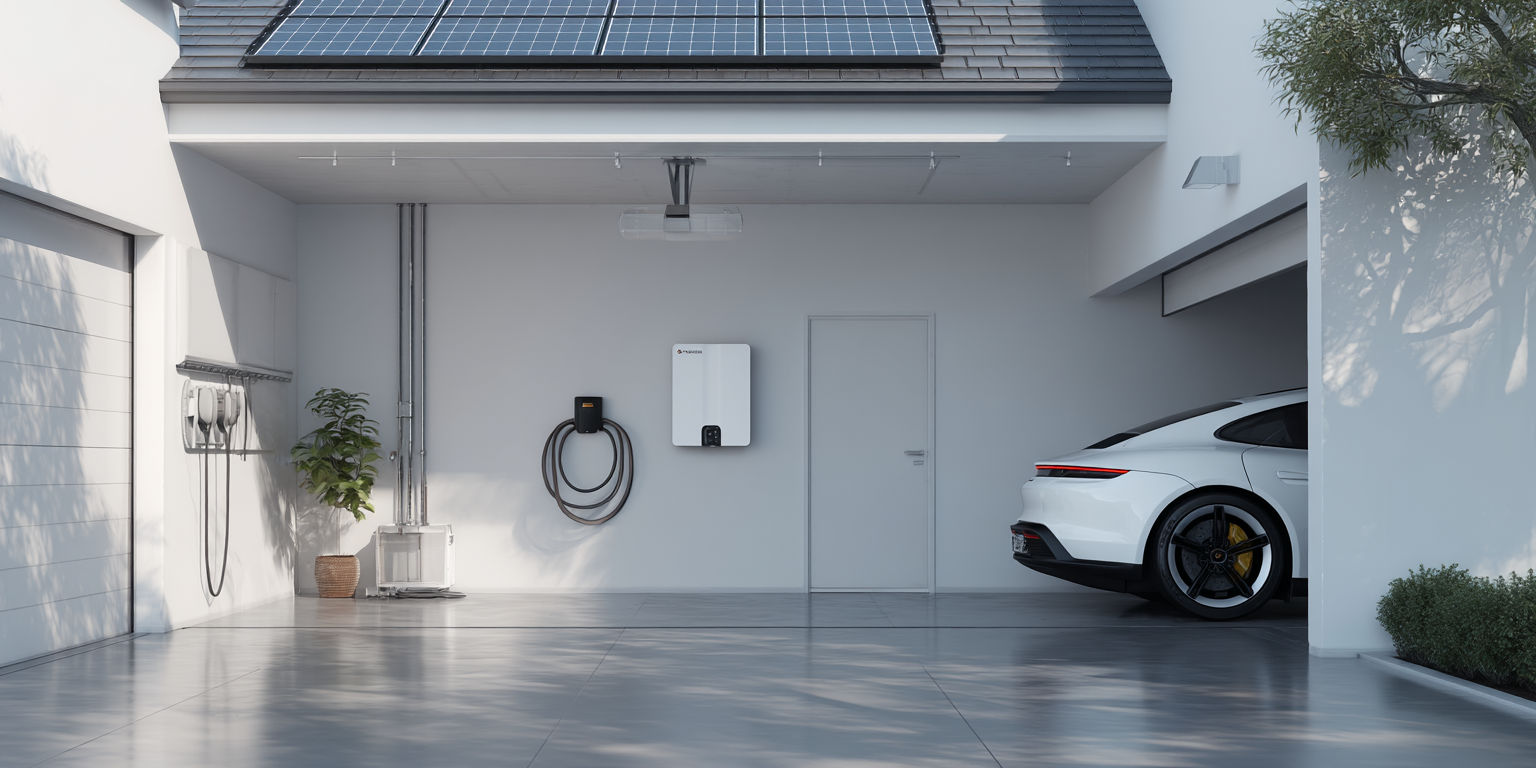
If a second vehicle, an 11kW upgrade or a bidirectional charger is a realistic future consideration, cable sizing and conduit routes should reflect this from the outset. Replanning cable infrastructure retrospectively costs significantly more than specifying it correctly at the first installation.
Chargers wall-mounted on a private driveway fall under permitted development for most properties. Listed buildings and properties within conservation areas may require planning consent - we advise at survey stage. DNO notification is a separate regulatory requirement: any charger above 3.68kW on a PME supply must be notified to your network operator. We manage this submission as a standard part of every installation, with the notification reference included in your handover pack.
A 7kW EV charger draws 32A continuously - equivalent to a large shower running non-stop. On an estate with heat pumps, smart kitchens and climate control, simultaneous operation can stress a 100A main fuse. We calculate your maximum demand precisely at survey stage and, where required, specify a Dynamic Load Balancing unit that monitors the entire property's live draw and modulates the EV's charge current in real time. Your main fuse is protected without interrupting the charging session.
A straightforward installation - wallbox to consumer unit with a clean cable route - completes in one day. Complex concealed routes through building fabric, underground runs across a driveway or courtyard, or installations requiring a consumer unit upgrade typically take two days. Your written quote states the expected programme clearly, including any DNO notification timelines.
Yes, where your inverter and charger are compatible. A solar-diverting charger can prioritise surplus PV generation before drawing from the grid. When paired with a battery system and a smart tariff, the charger can be configured to use solar first, stored battery energy second, and grid power during low-cost overnight windows. The specific integration depends on your hardware combination - we confirm this at survey stage. See our solar-compatible EV chargers and battery-linked EV charging pages for more detail.
Yes, though the incoming supply capacity and consumer unit will determine how this is arranged. Two 7kW chargers drawing simultaneously represent a 64A continuous load on a single-phase supply, which is not manageable without dynamic load balancing or a supply upgrade. We assess the supply and propose the appropriate solution - which may involve a shared load balancing system, staggered charging schedules, or a DNO supply upgrade application. Return to our EV charging hub for an overview of all EV charging services.

A wallbox is the most visible component of an installation whose most critical work is entirely hidden. The cable sizing, protection coordination, load management and earthing architecture behind your charger are what define whether the system will perform safely for the next 15 years.
What a premium installation includes:
"We would rather invest the planning time once than apologise for an inadequate installation for years."